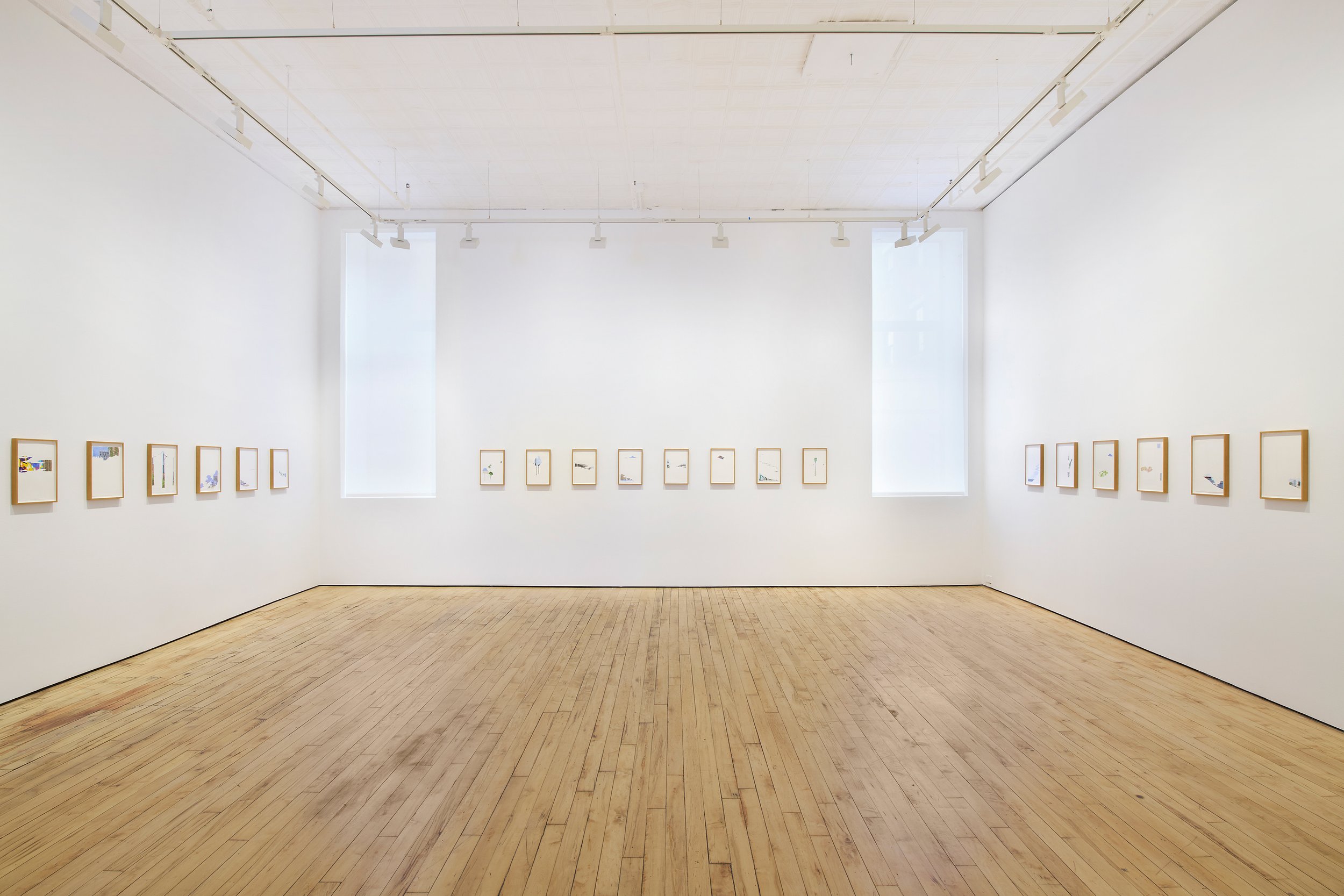
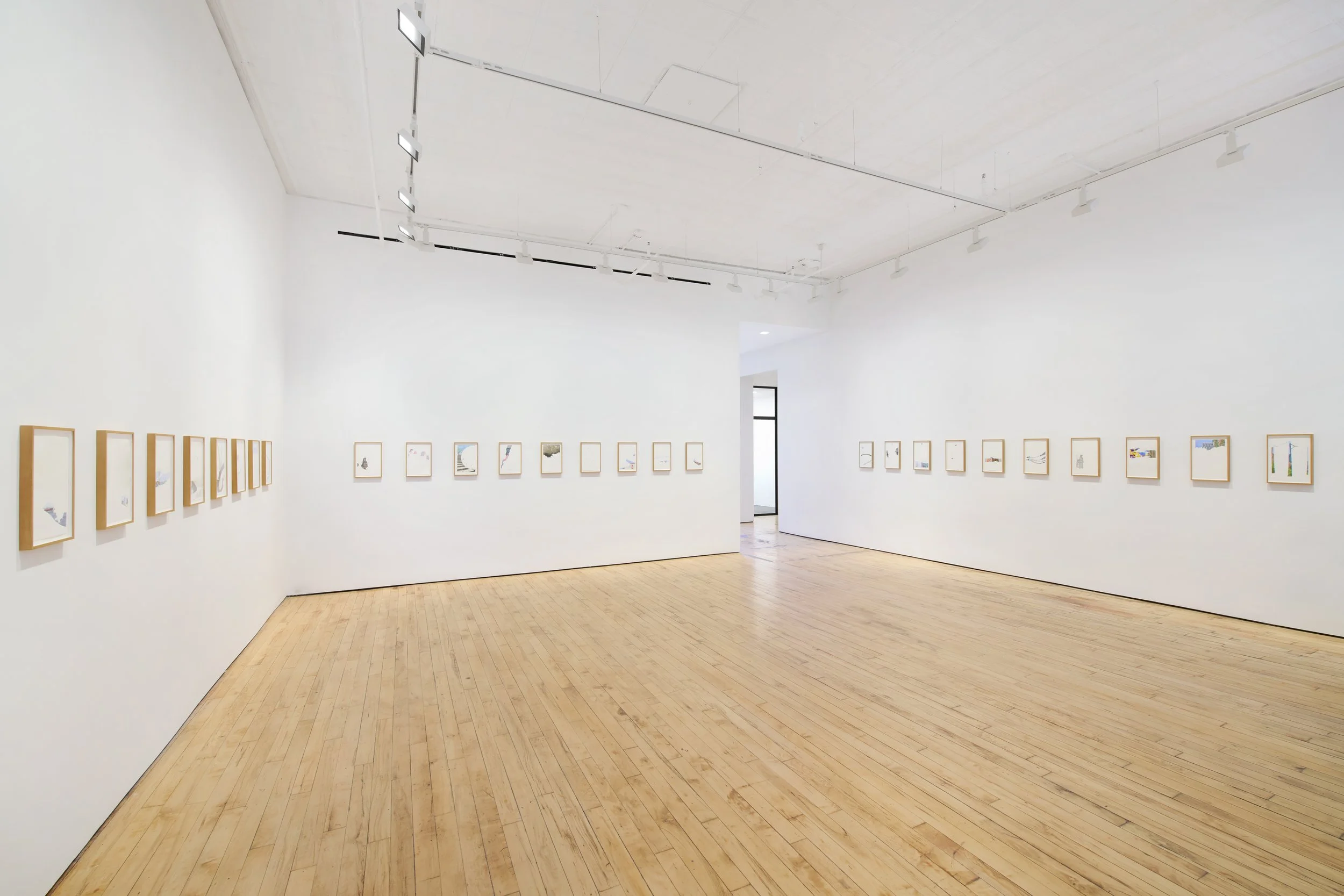
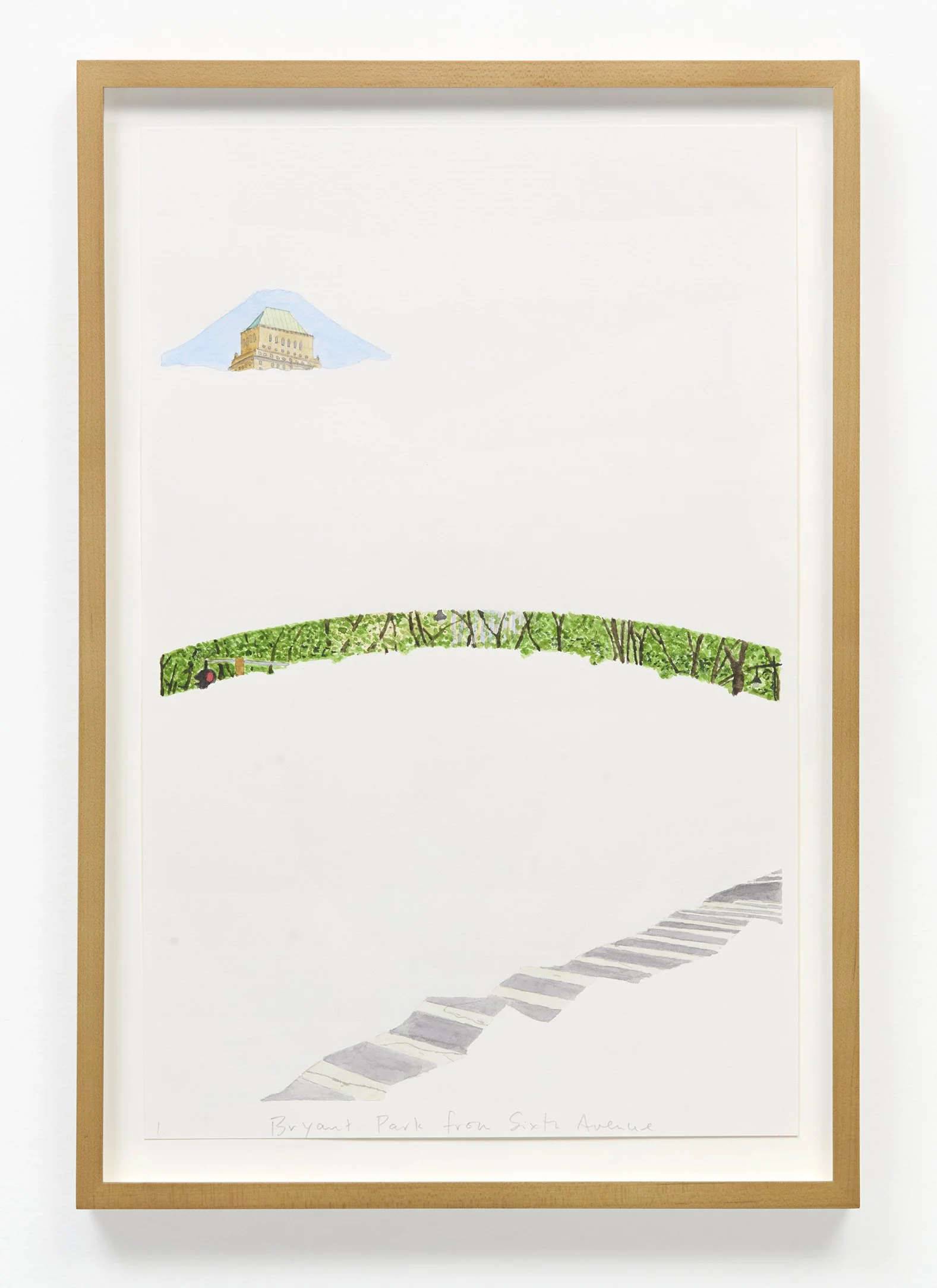
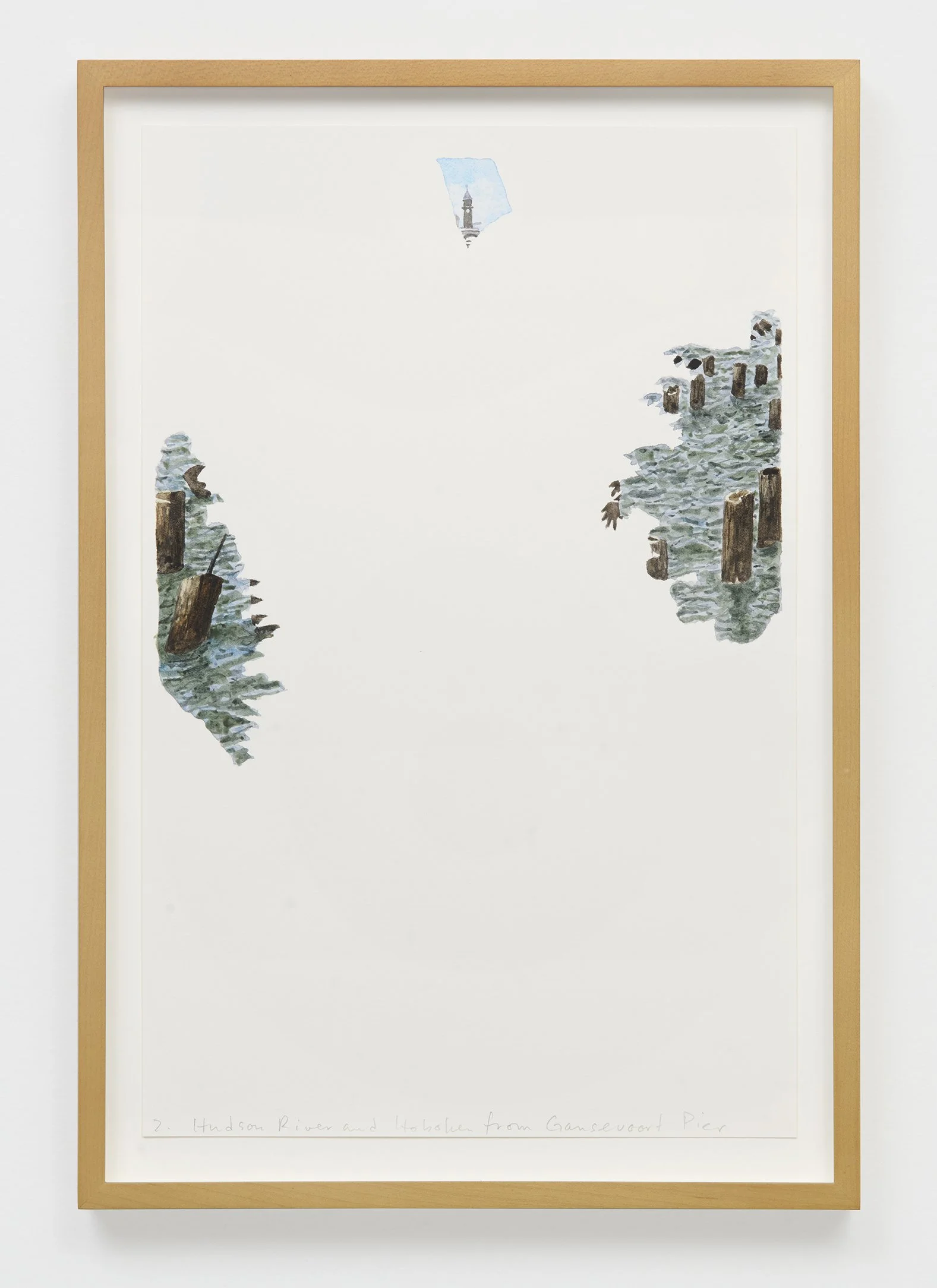
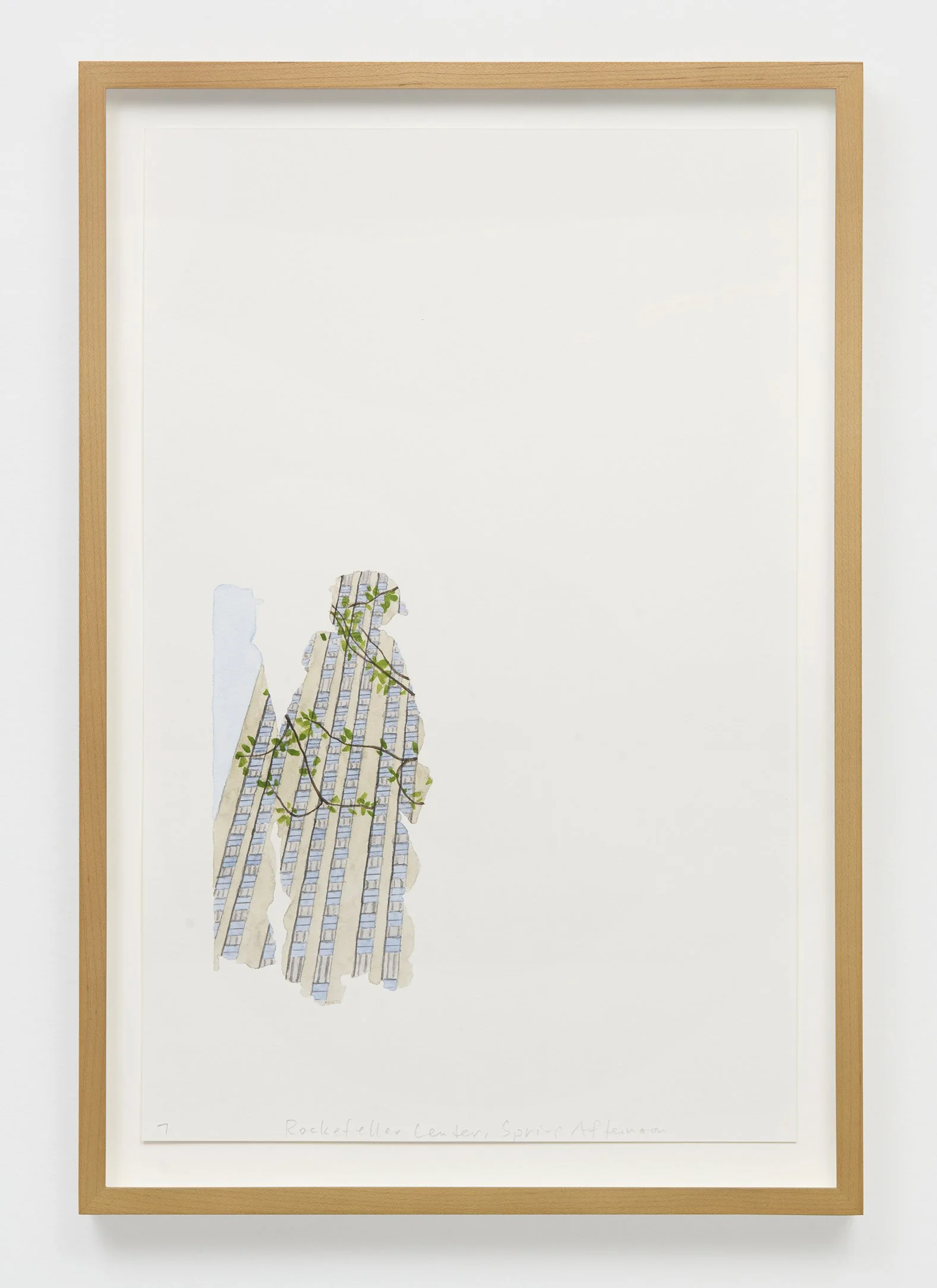
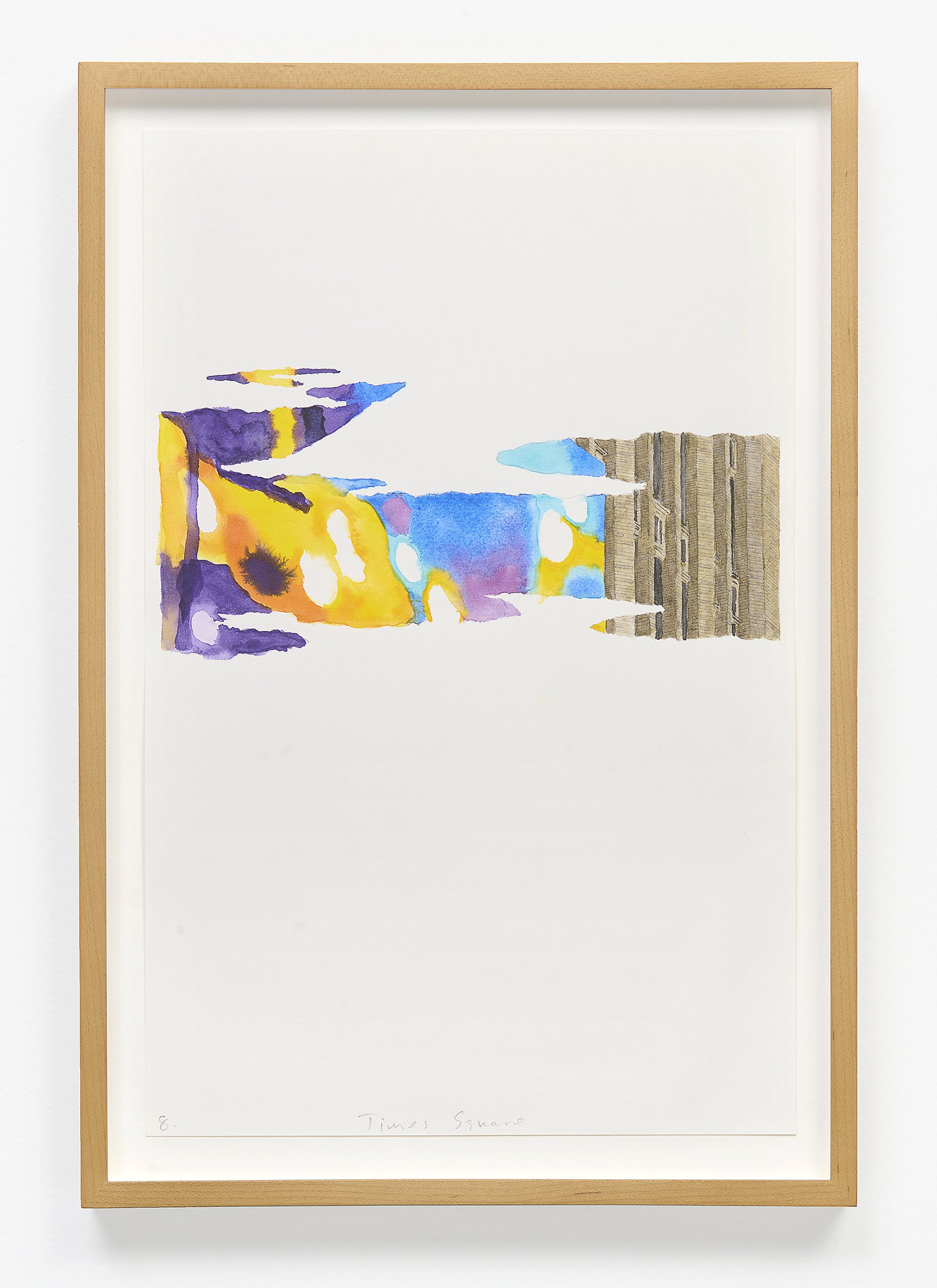
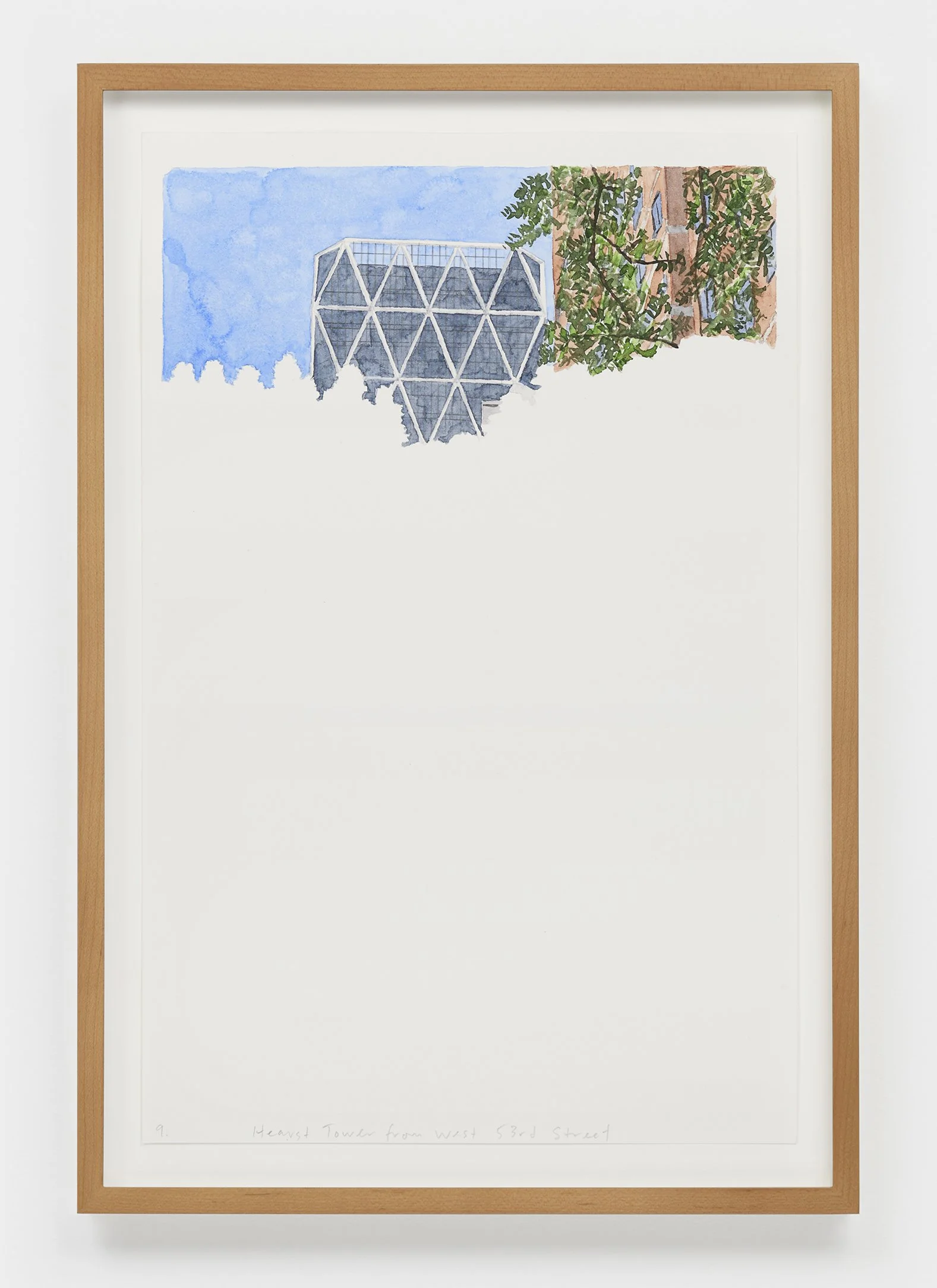
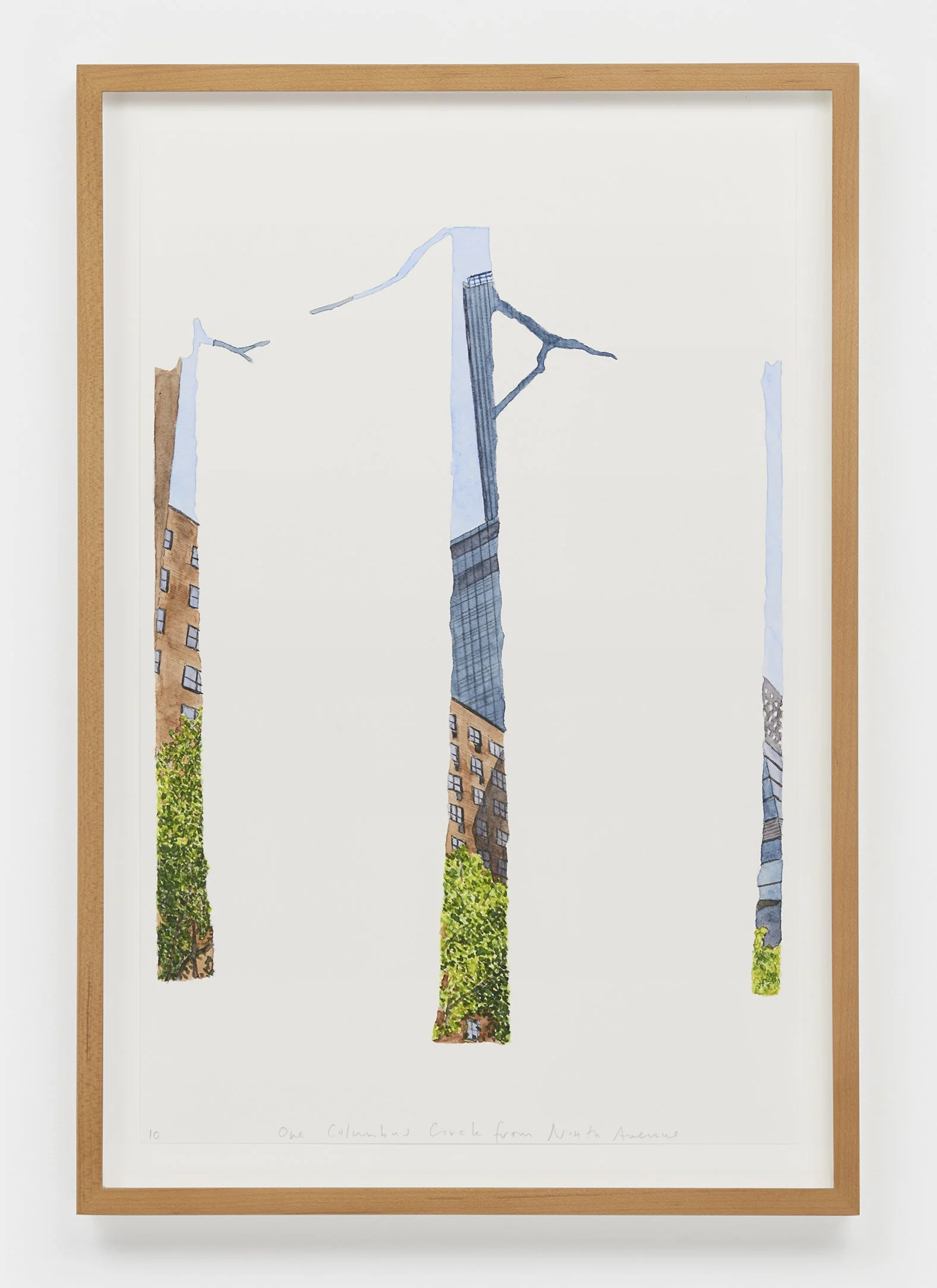
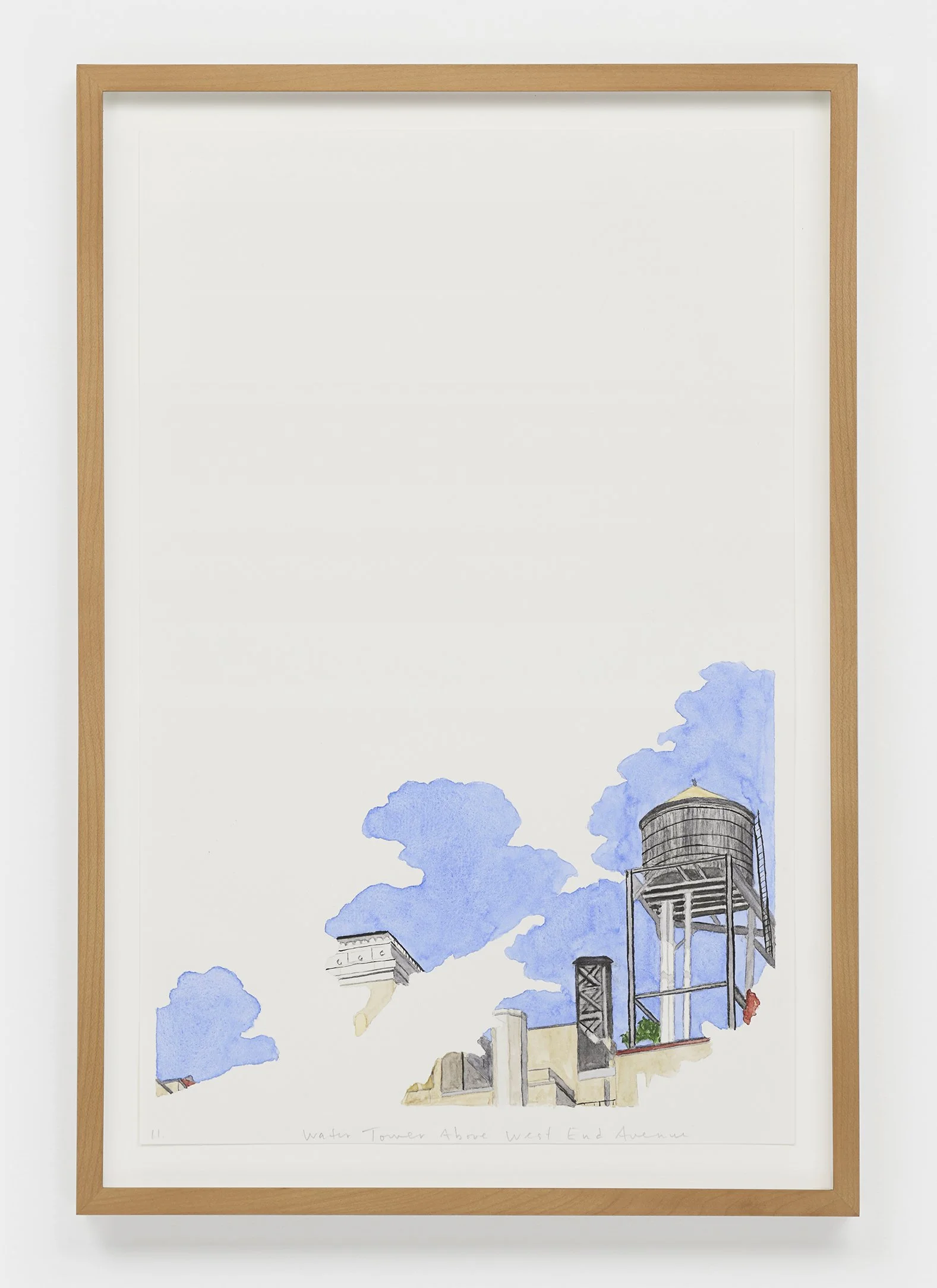
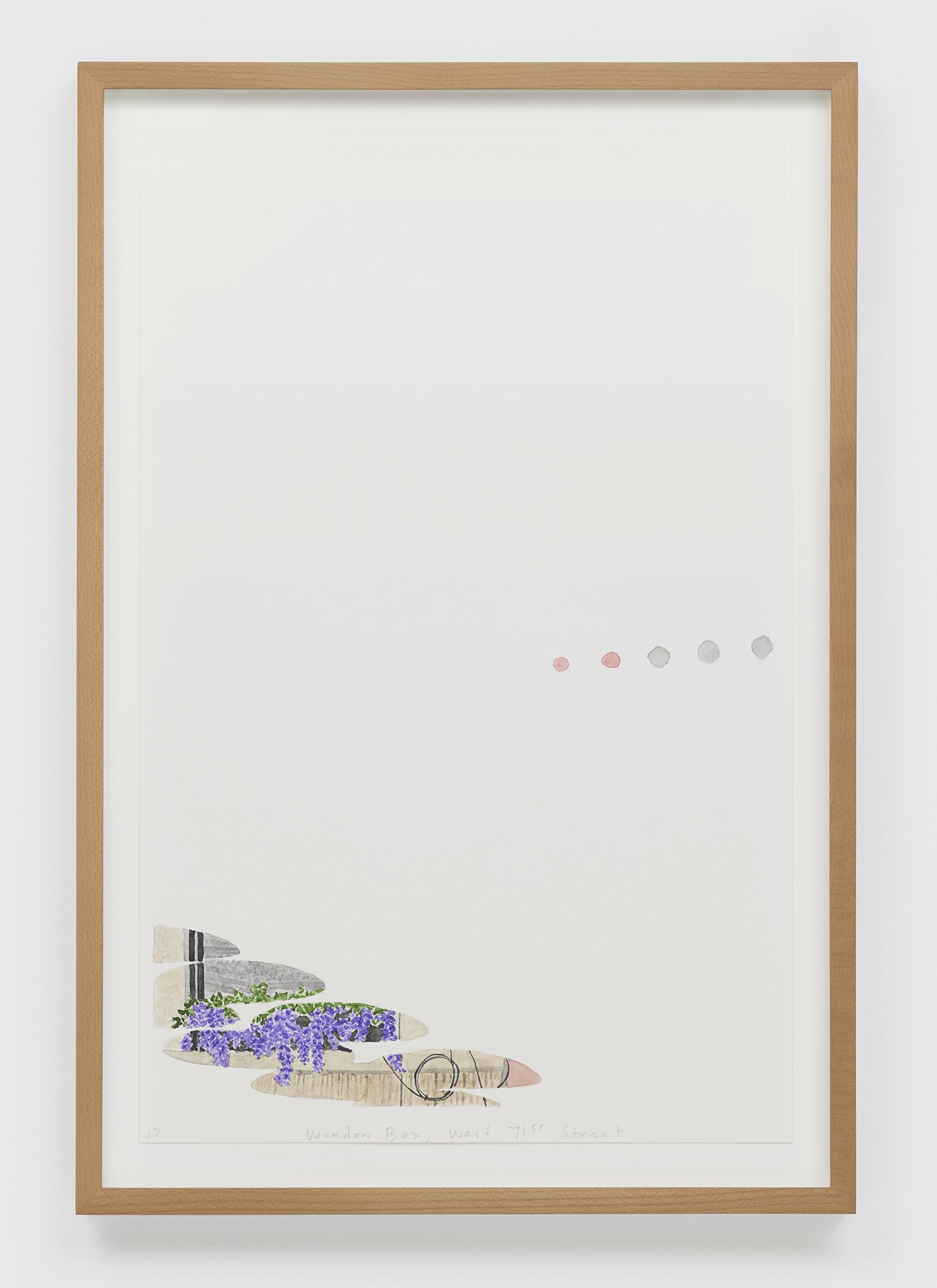
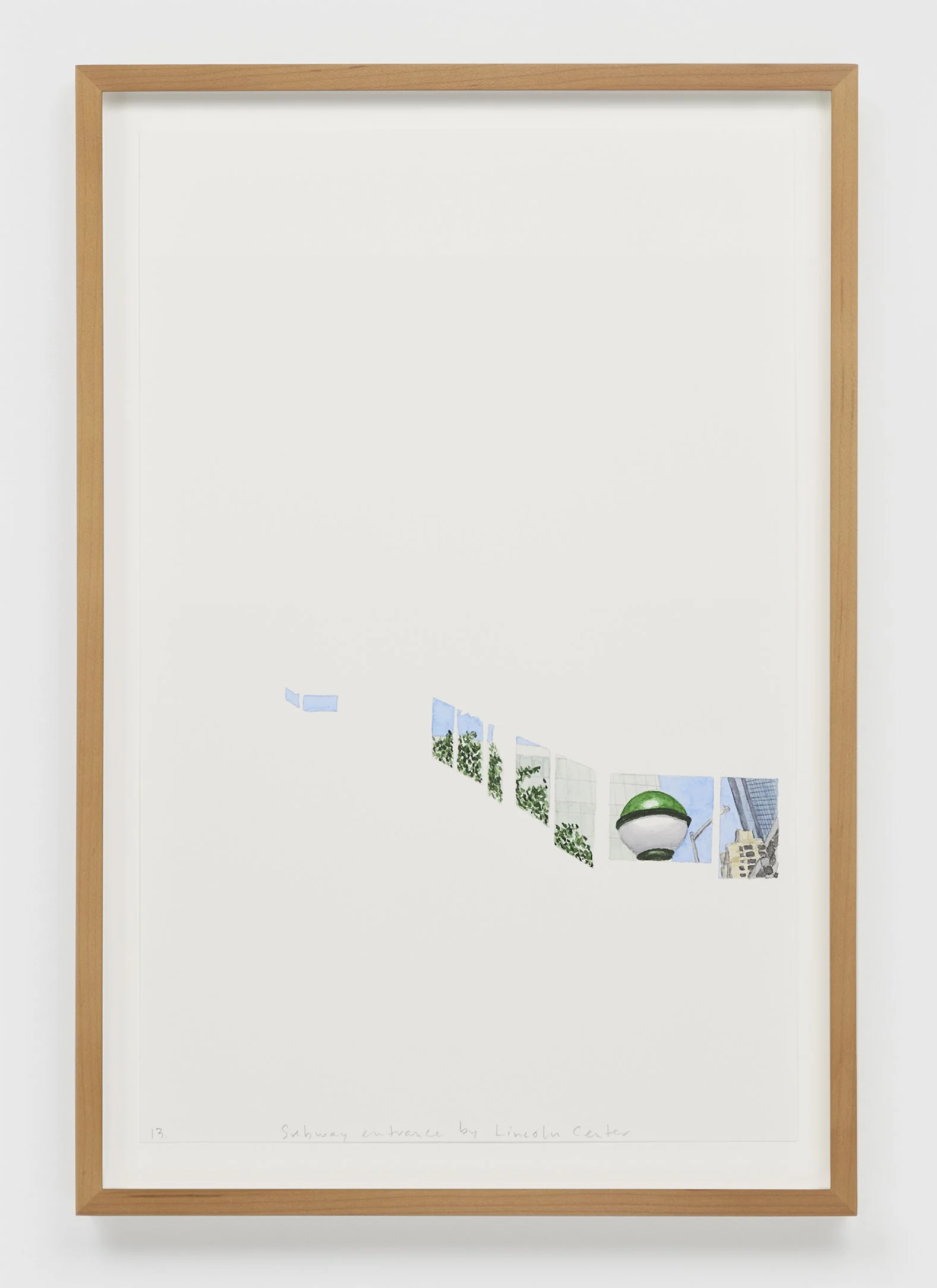
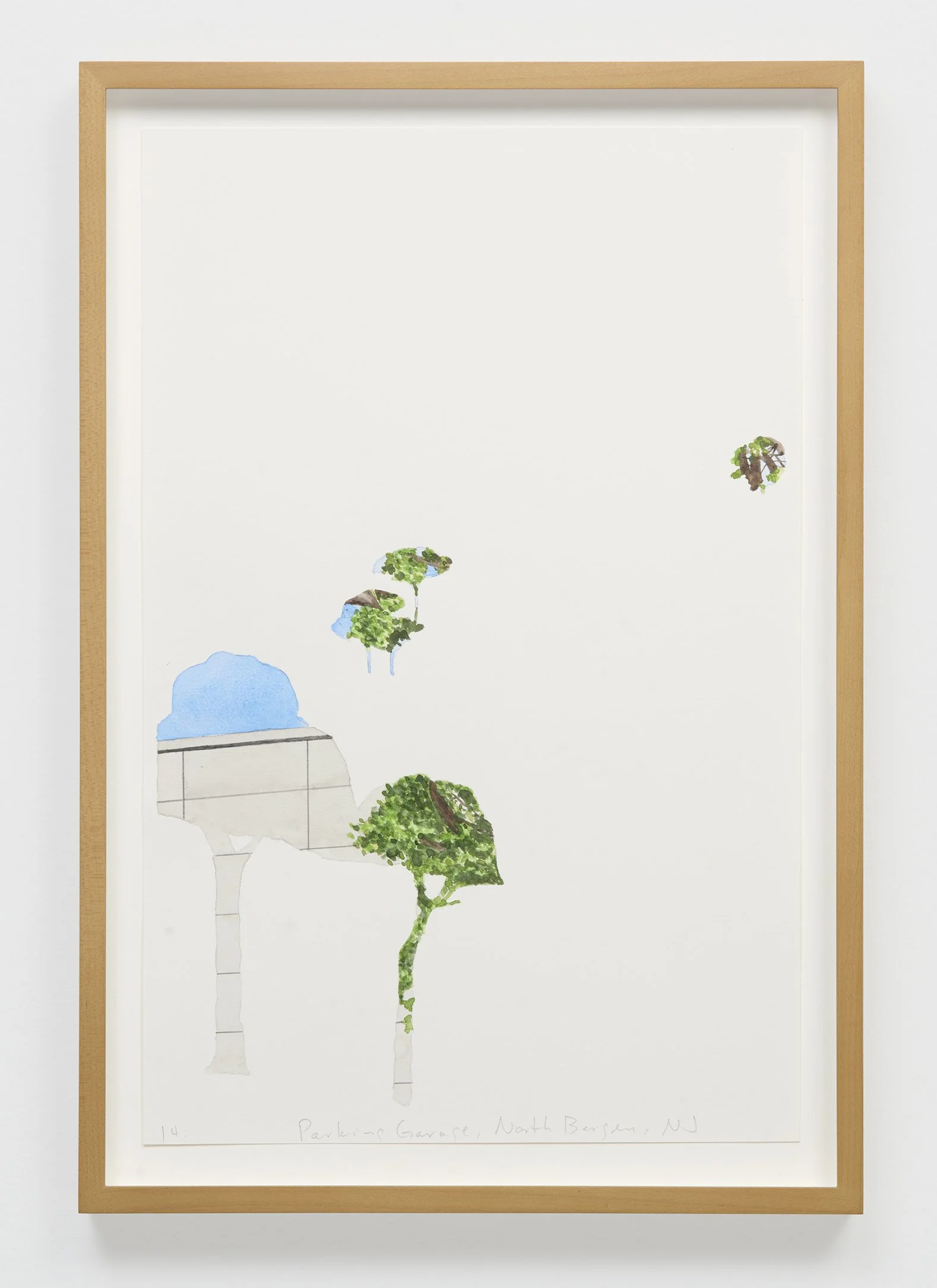
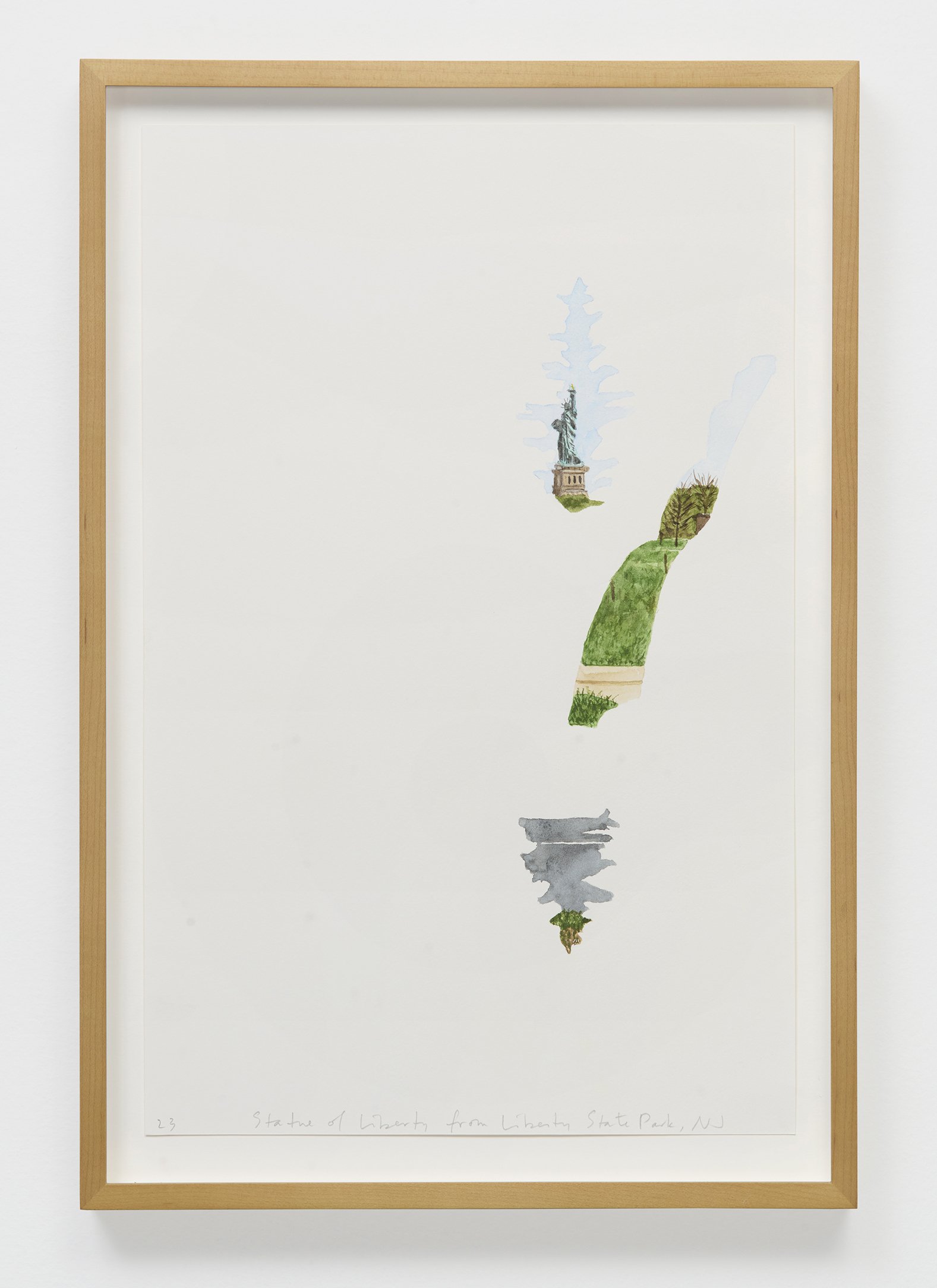
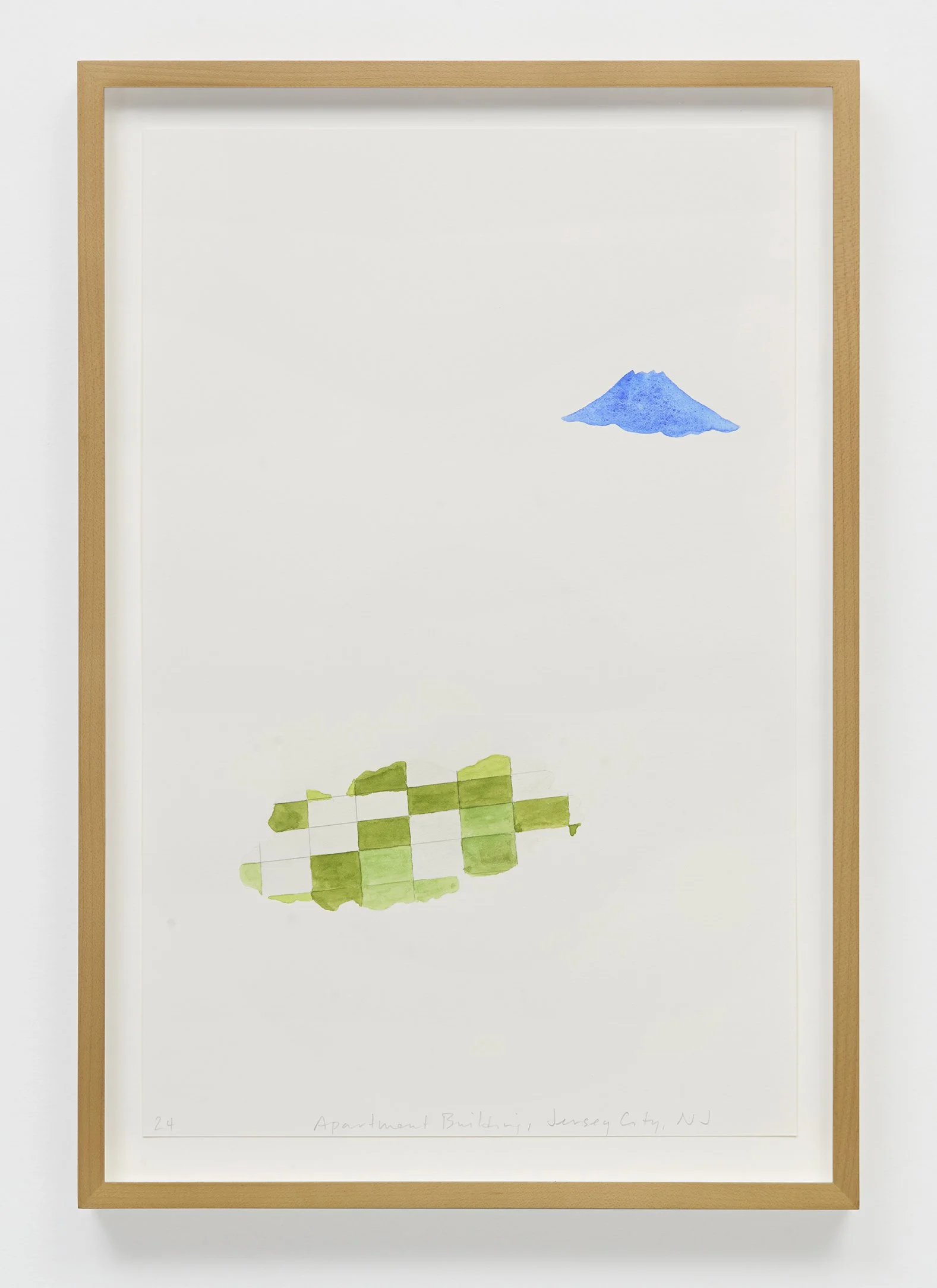
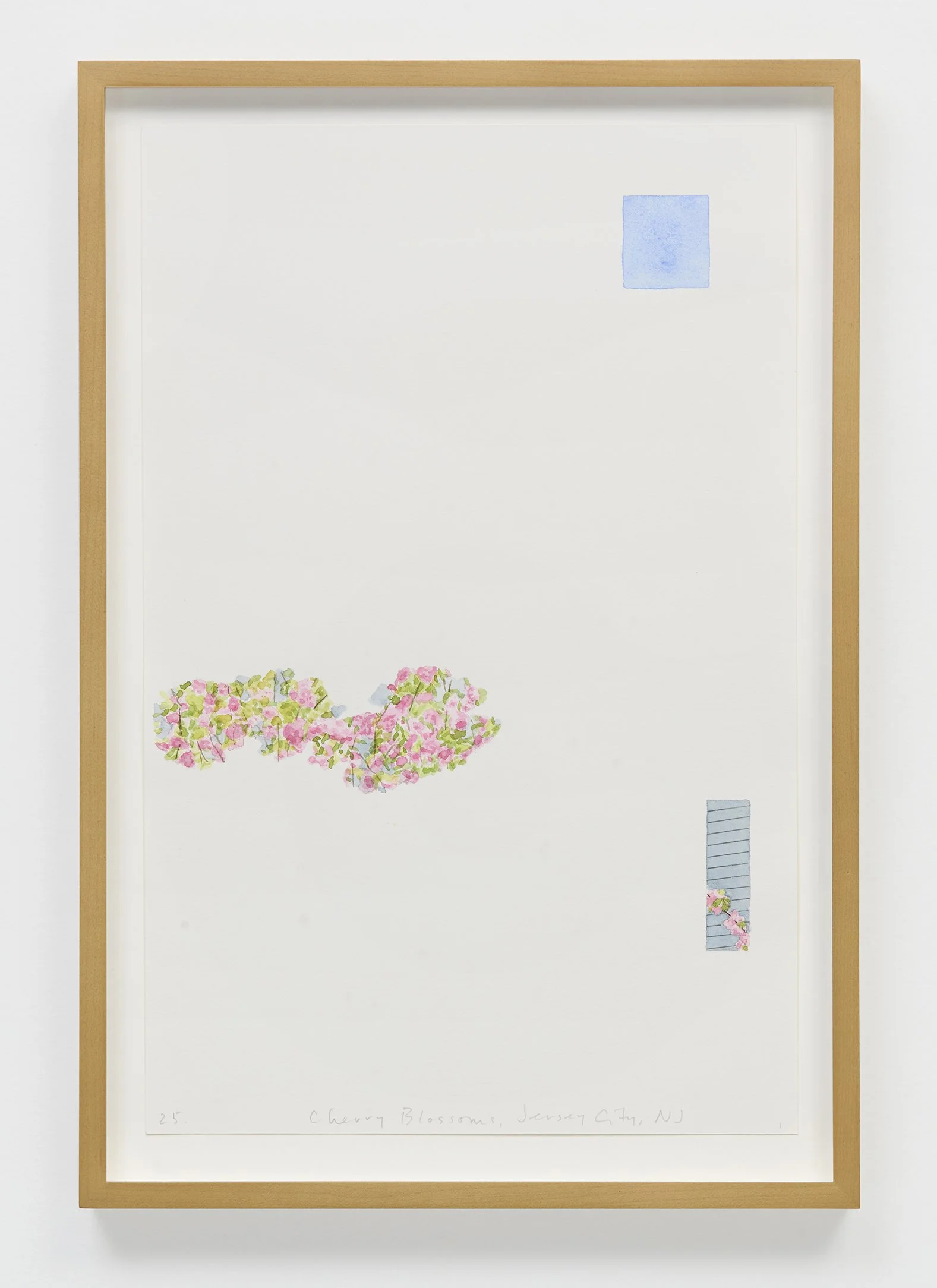
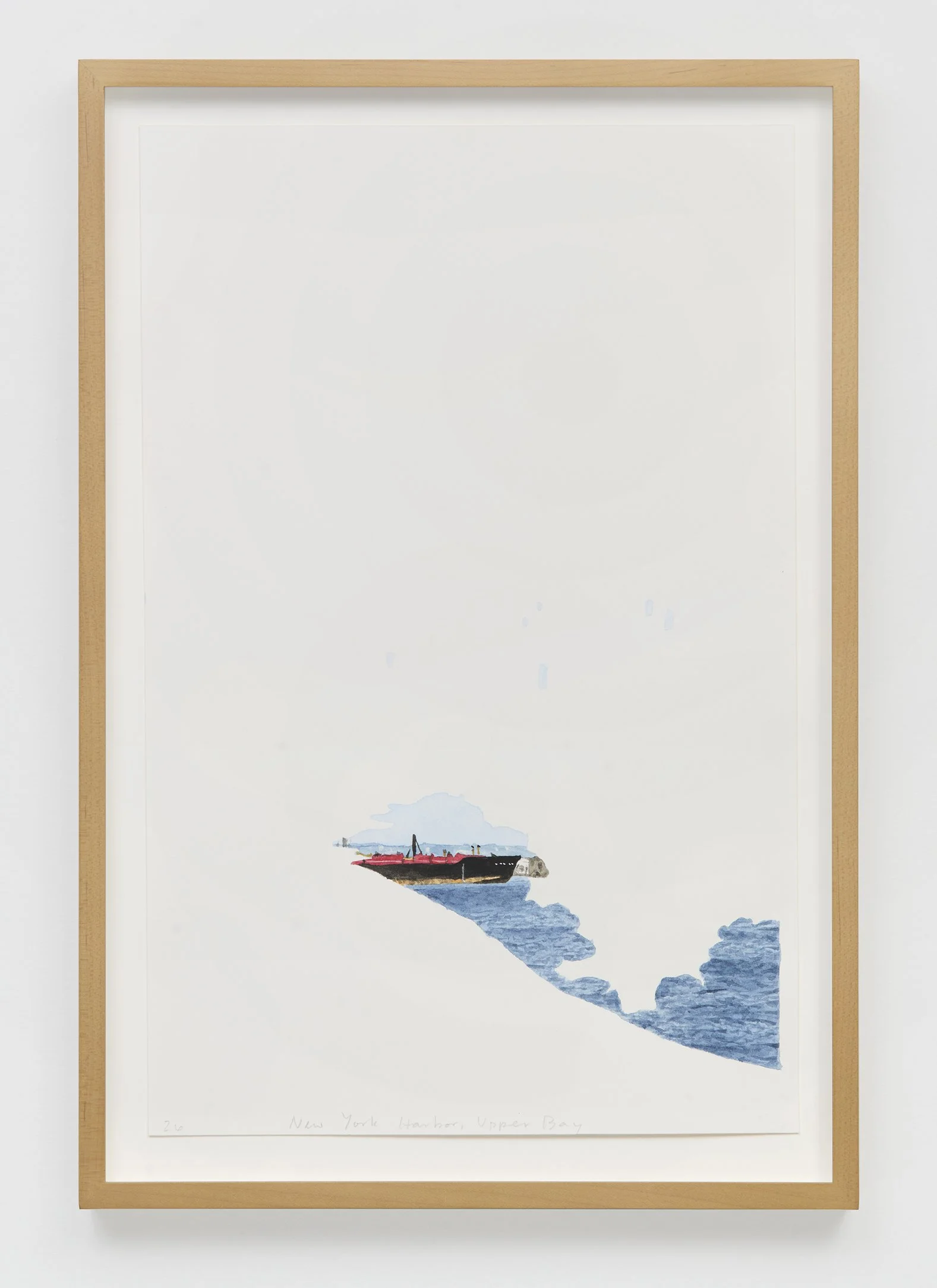
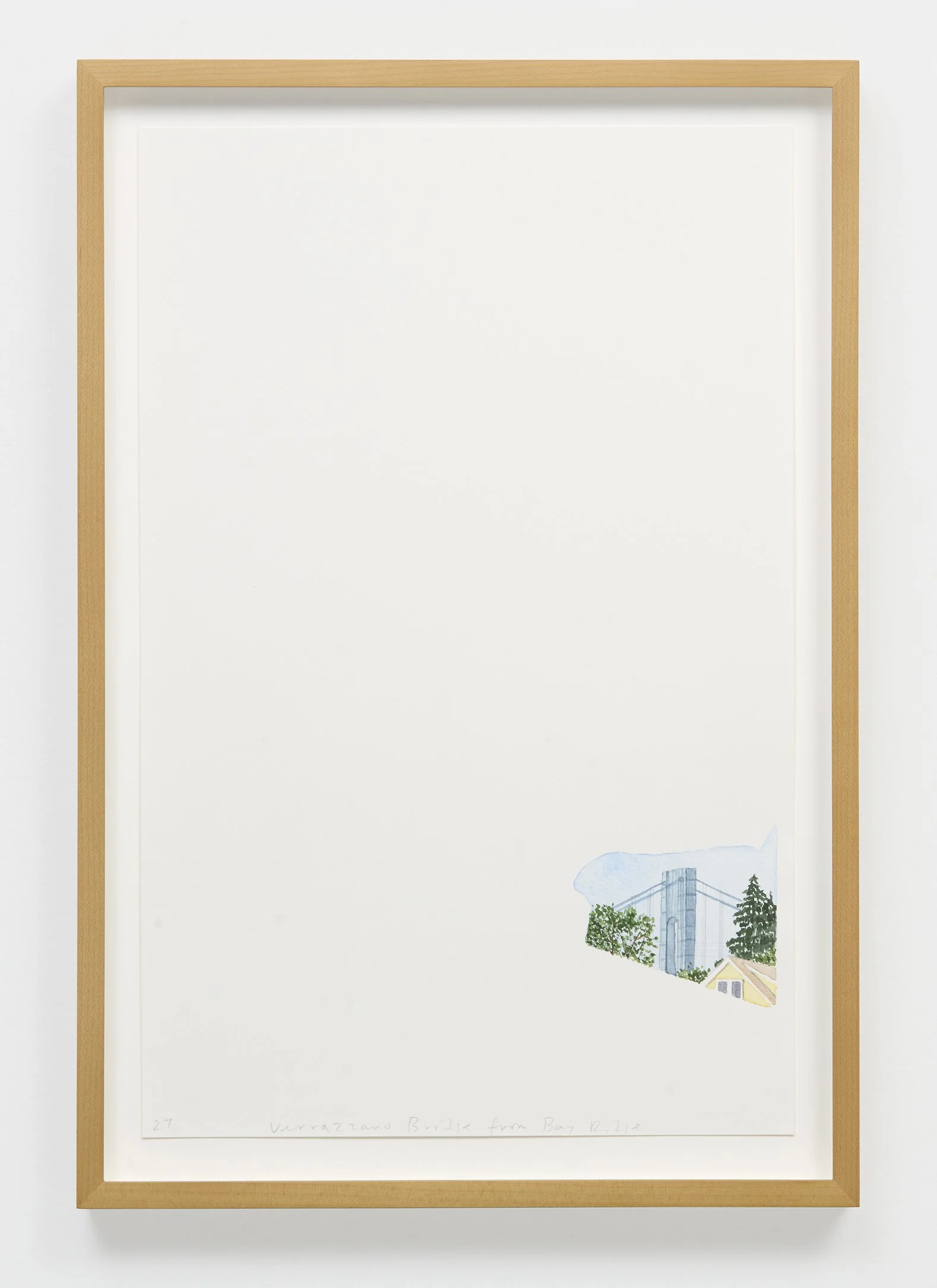
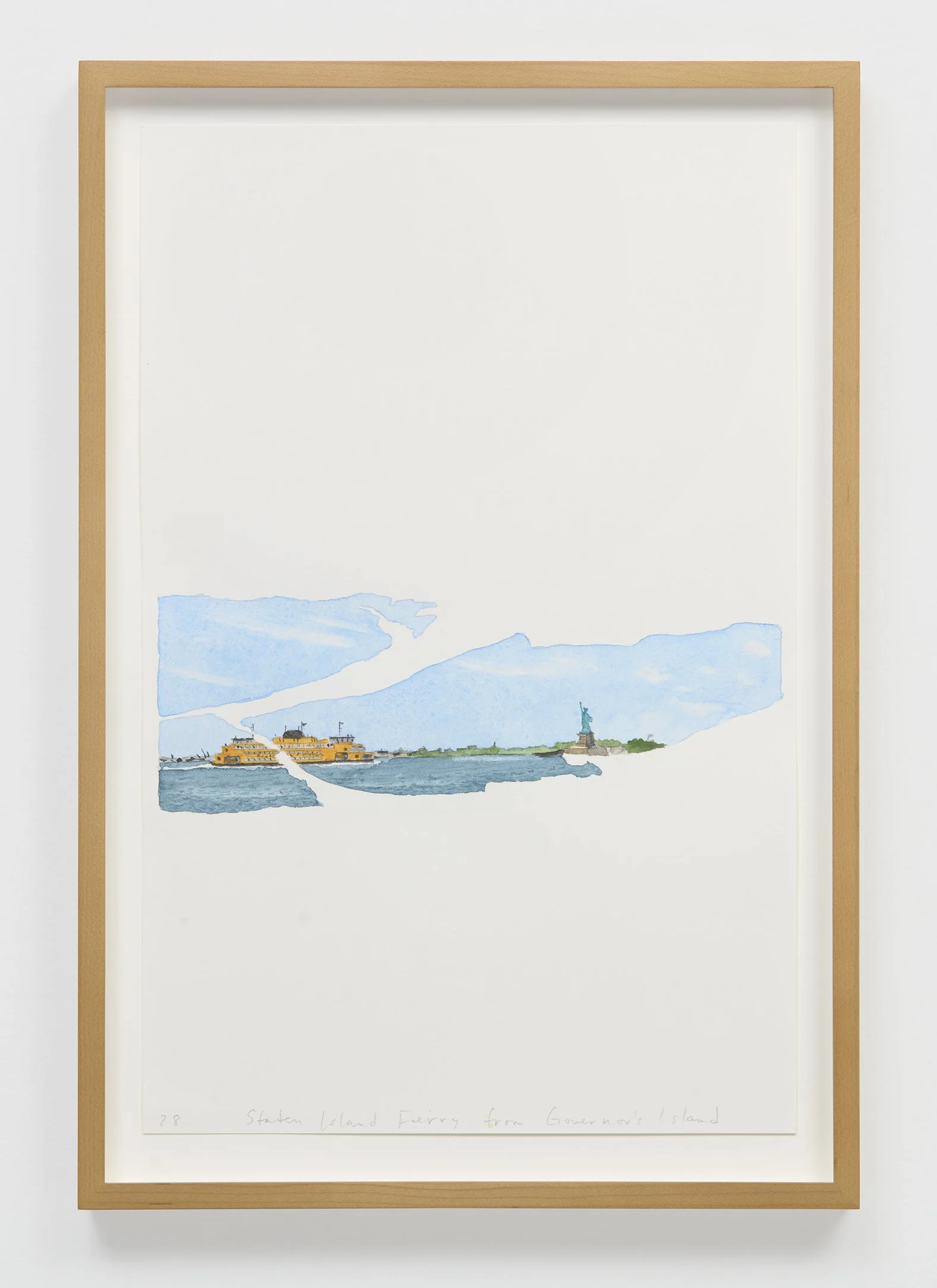
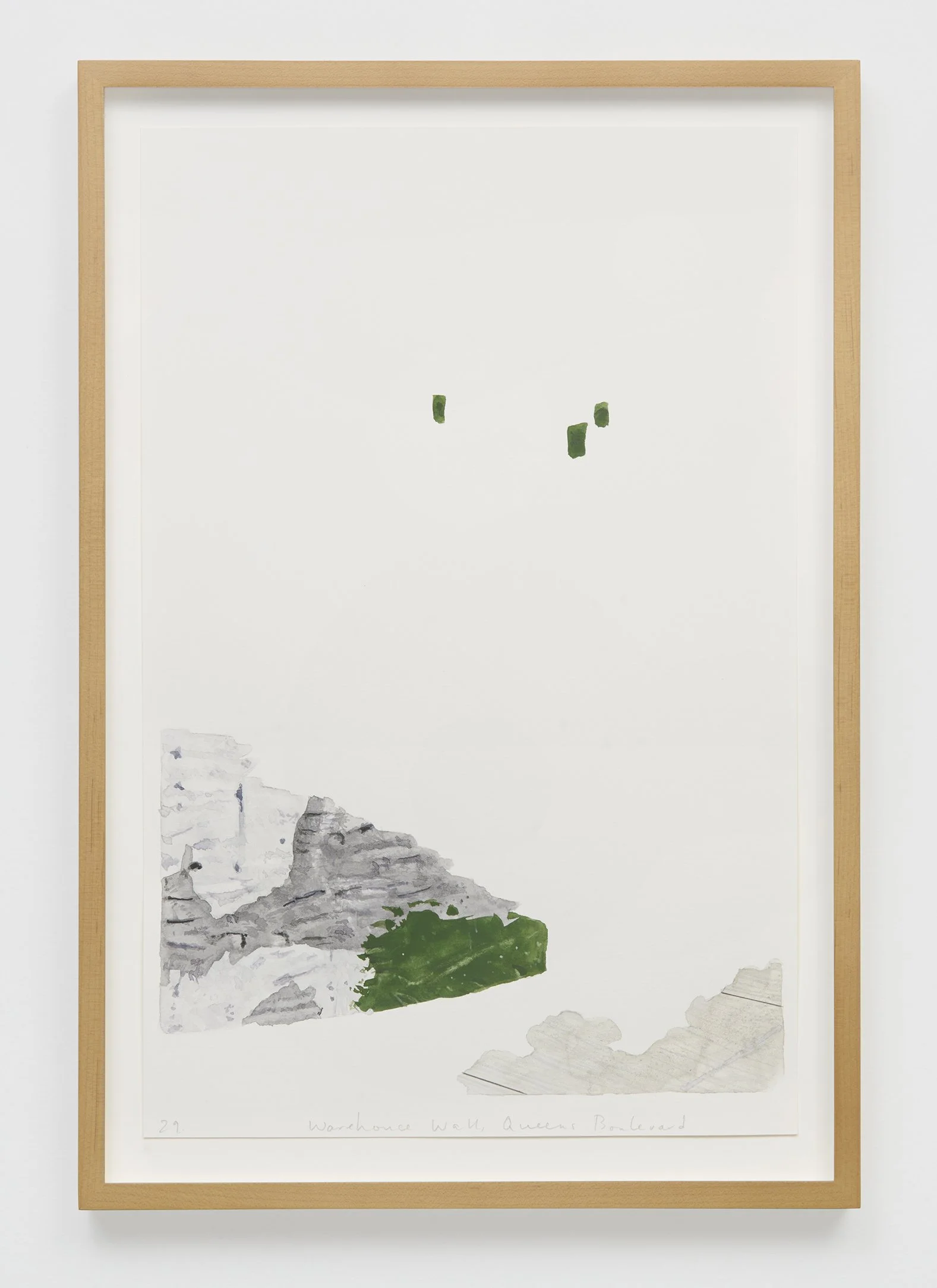
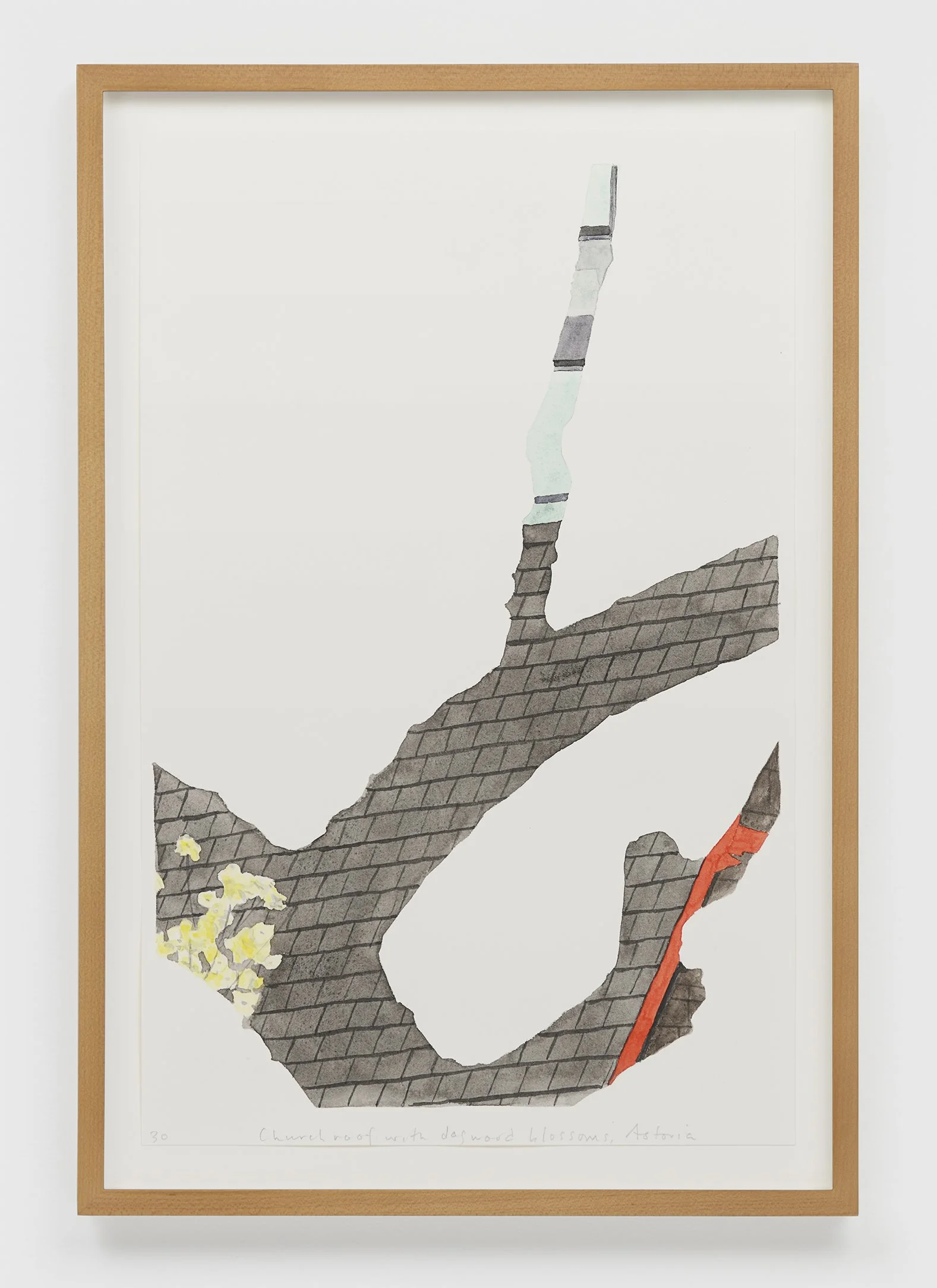
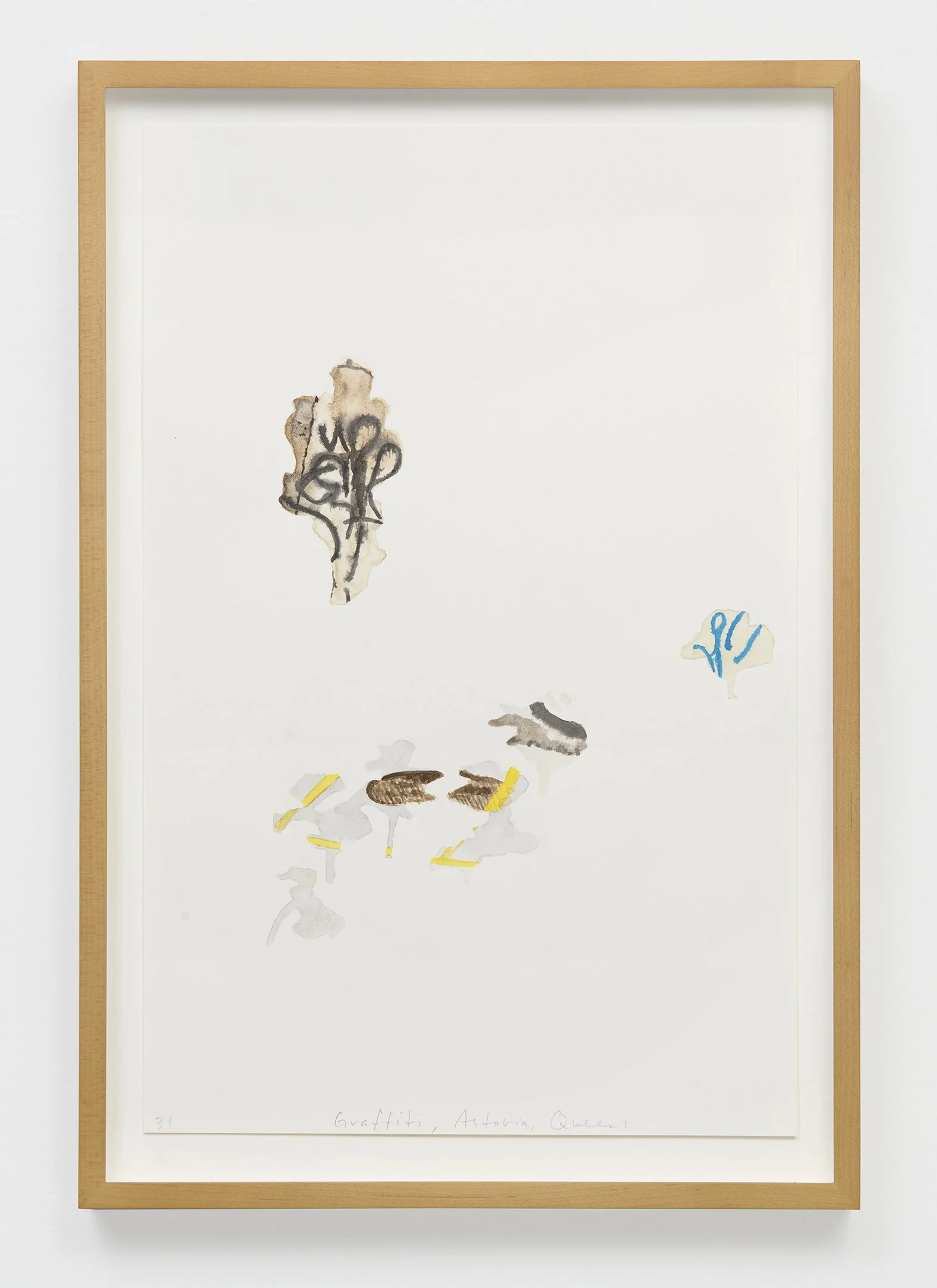
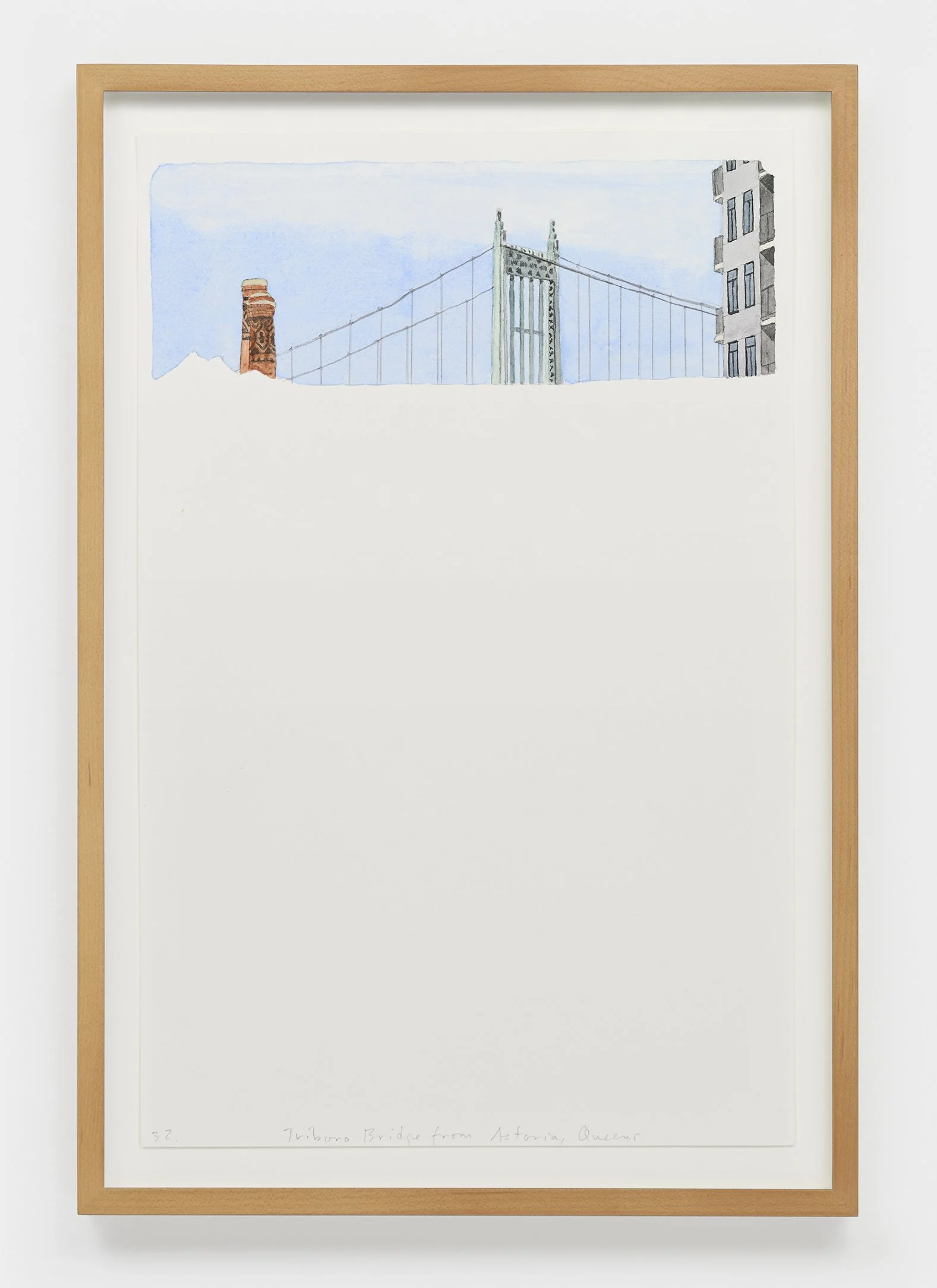
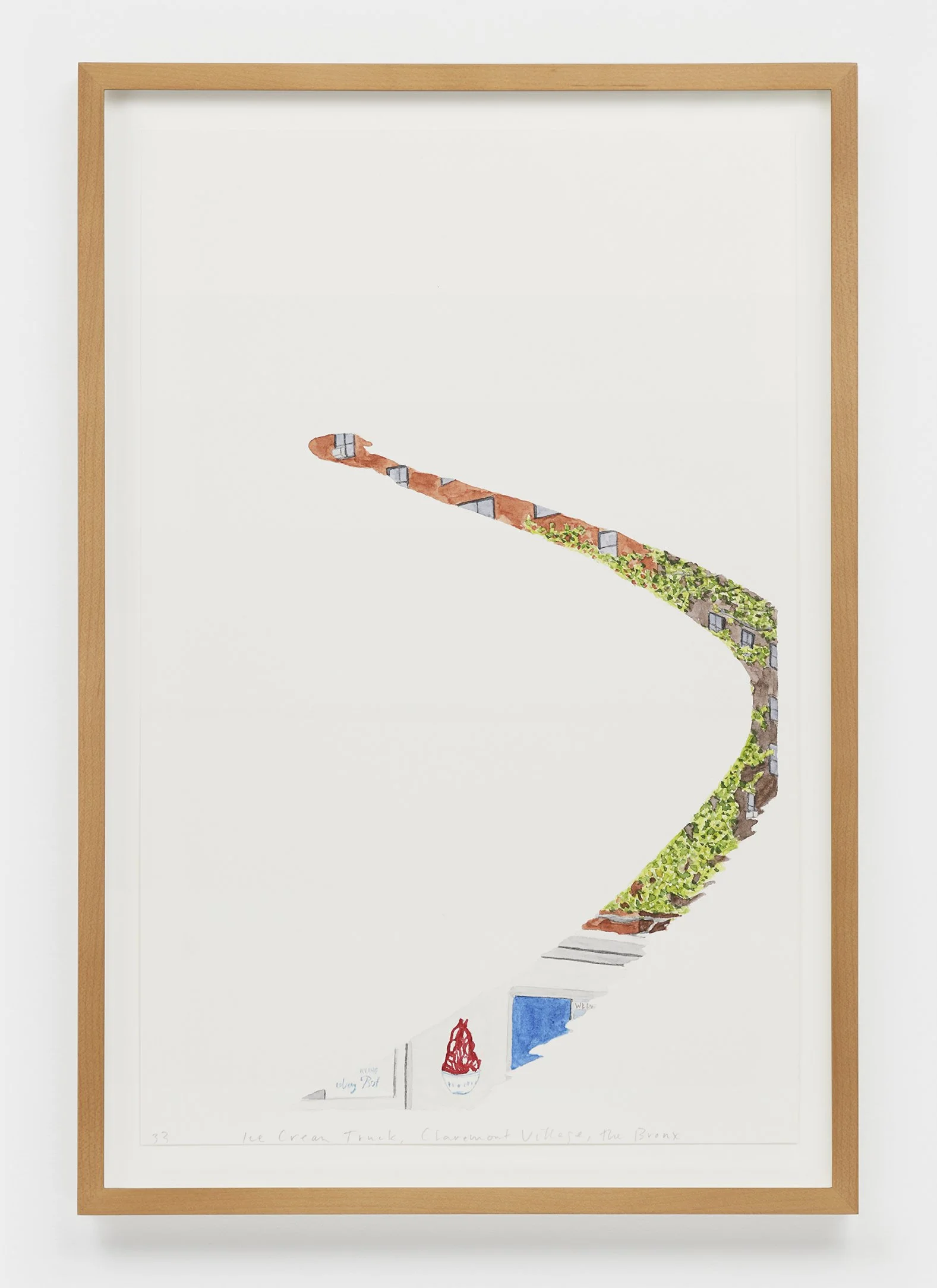
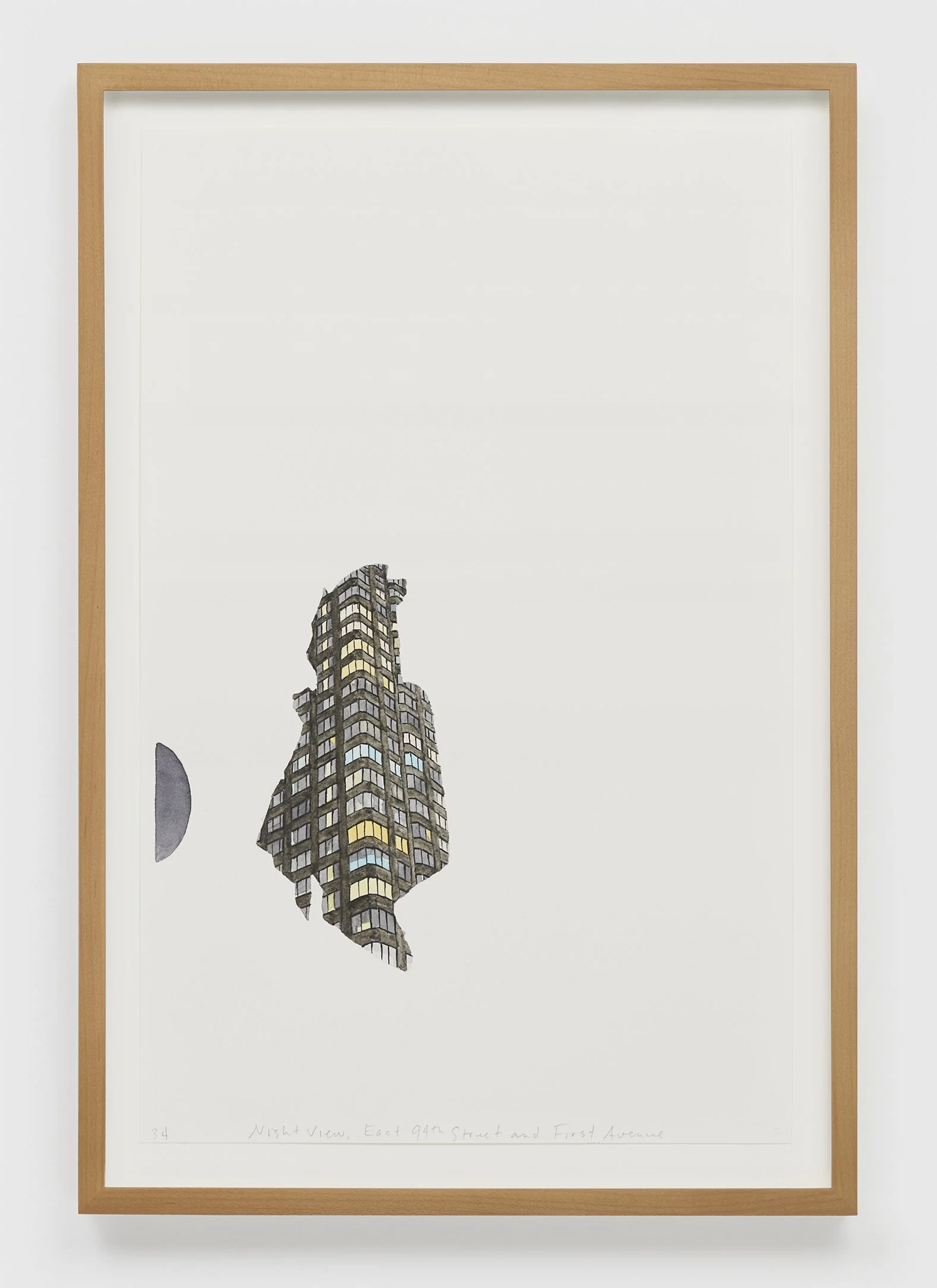
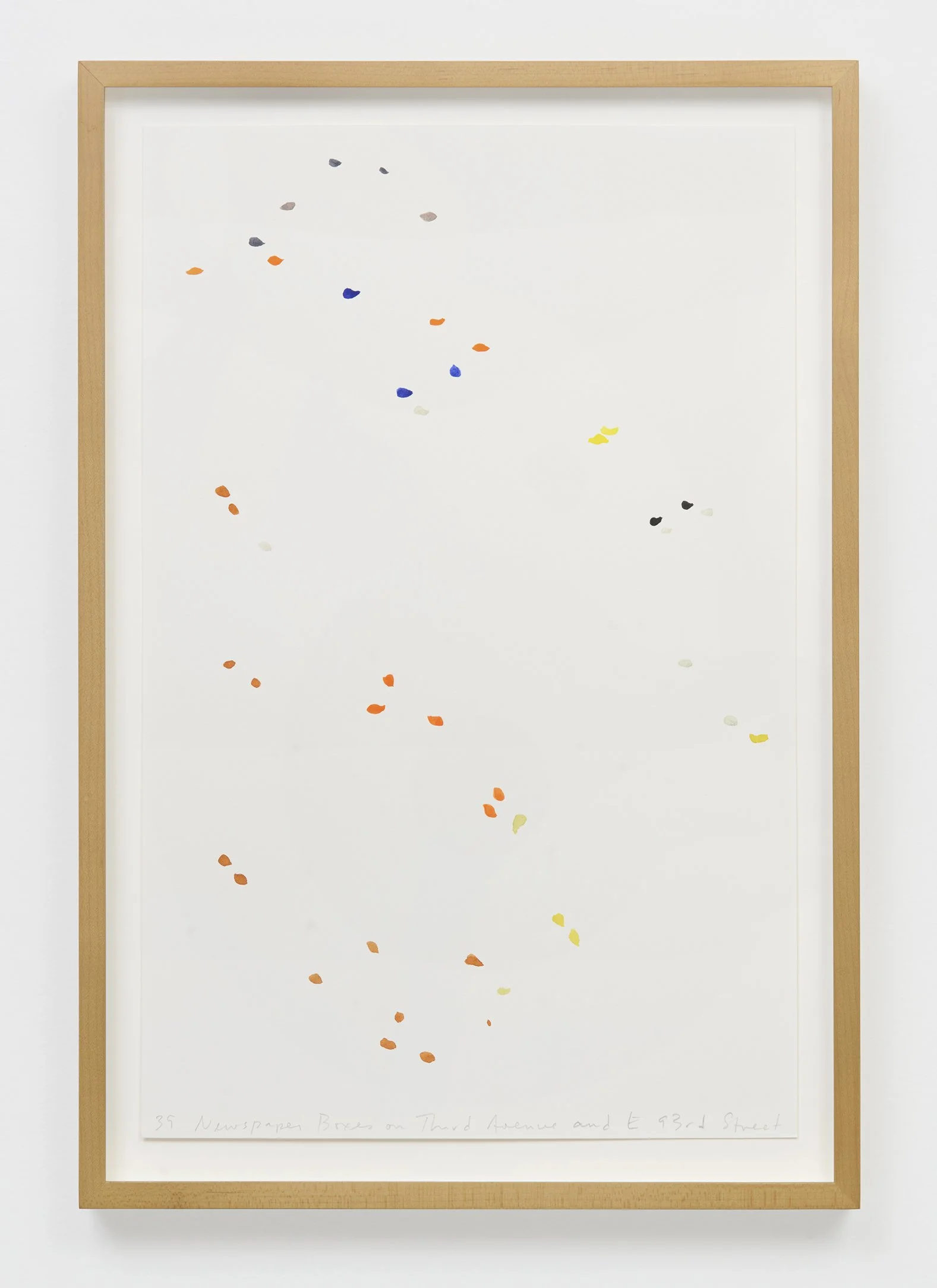
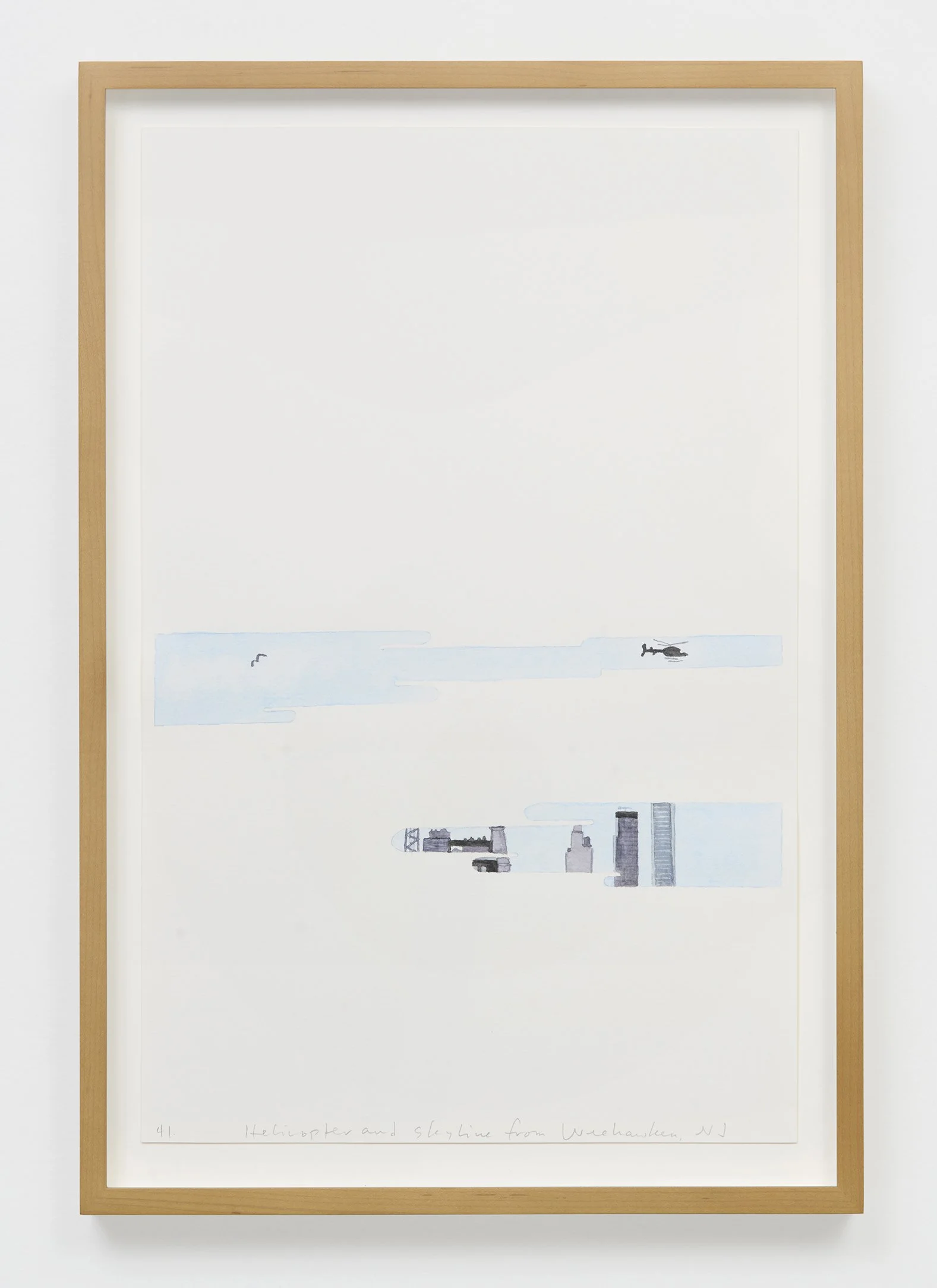
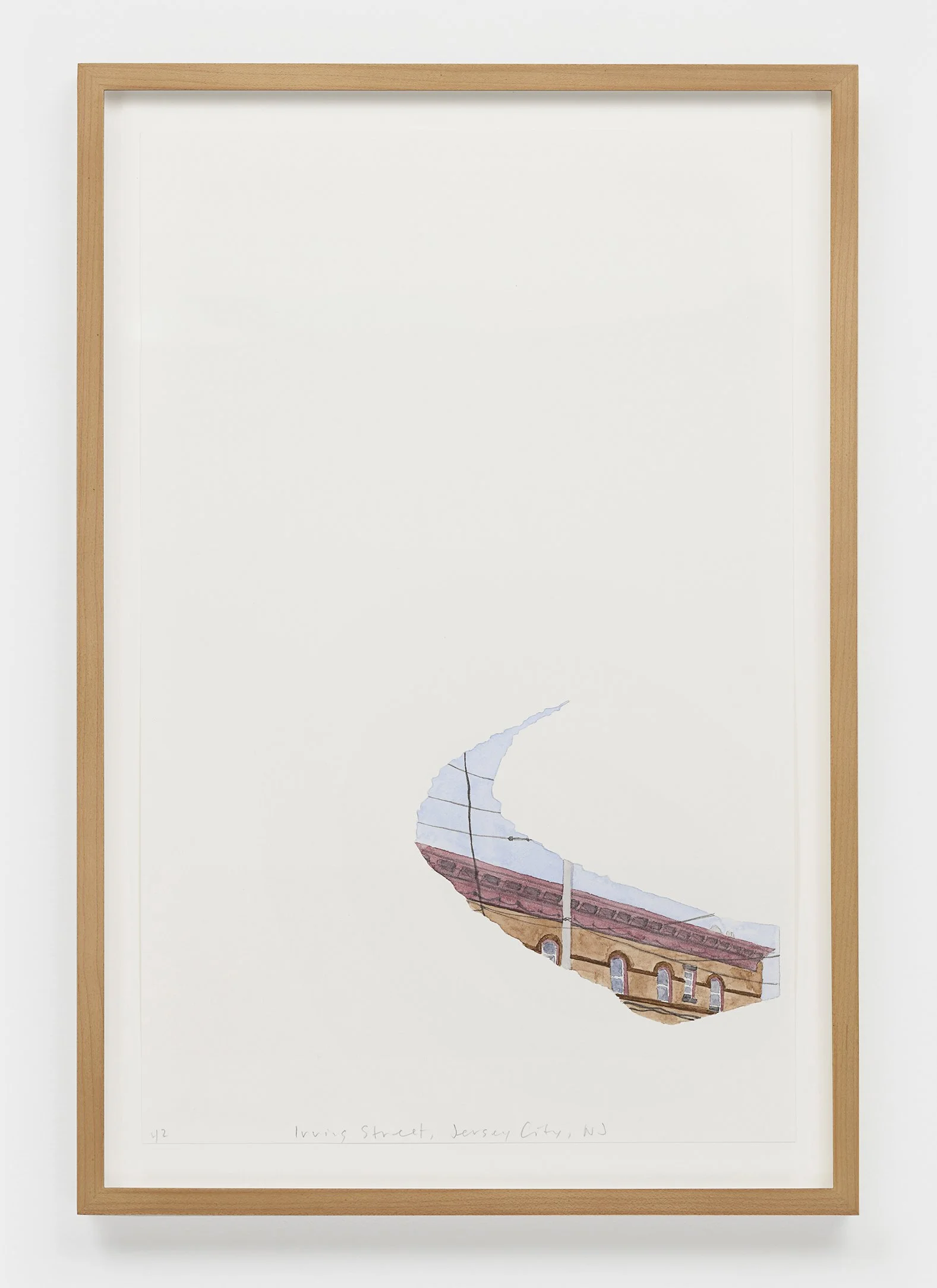
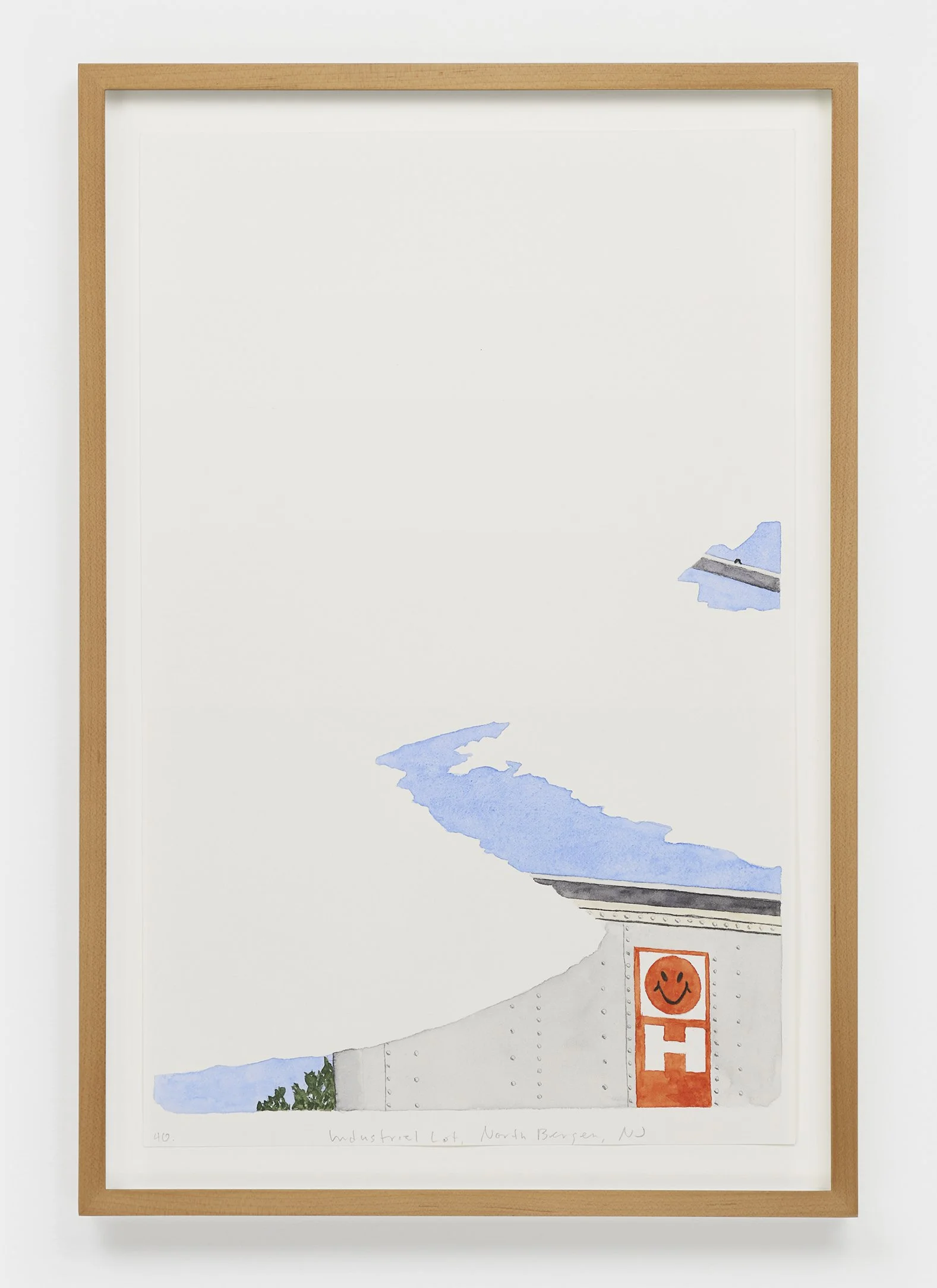
100 Famous Views of New York City (After Hiroshige)
Watercolor on paper
42 drawings at 14.25” x 9.25”
2025
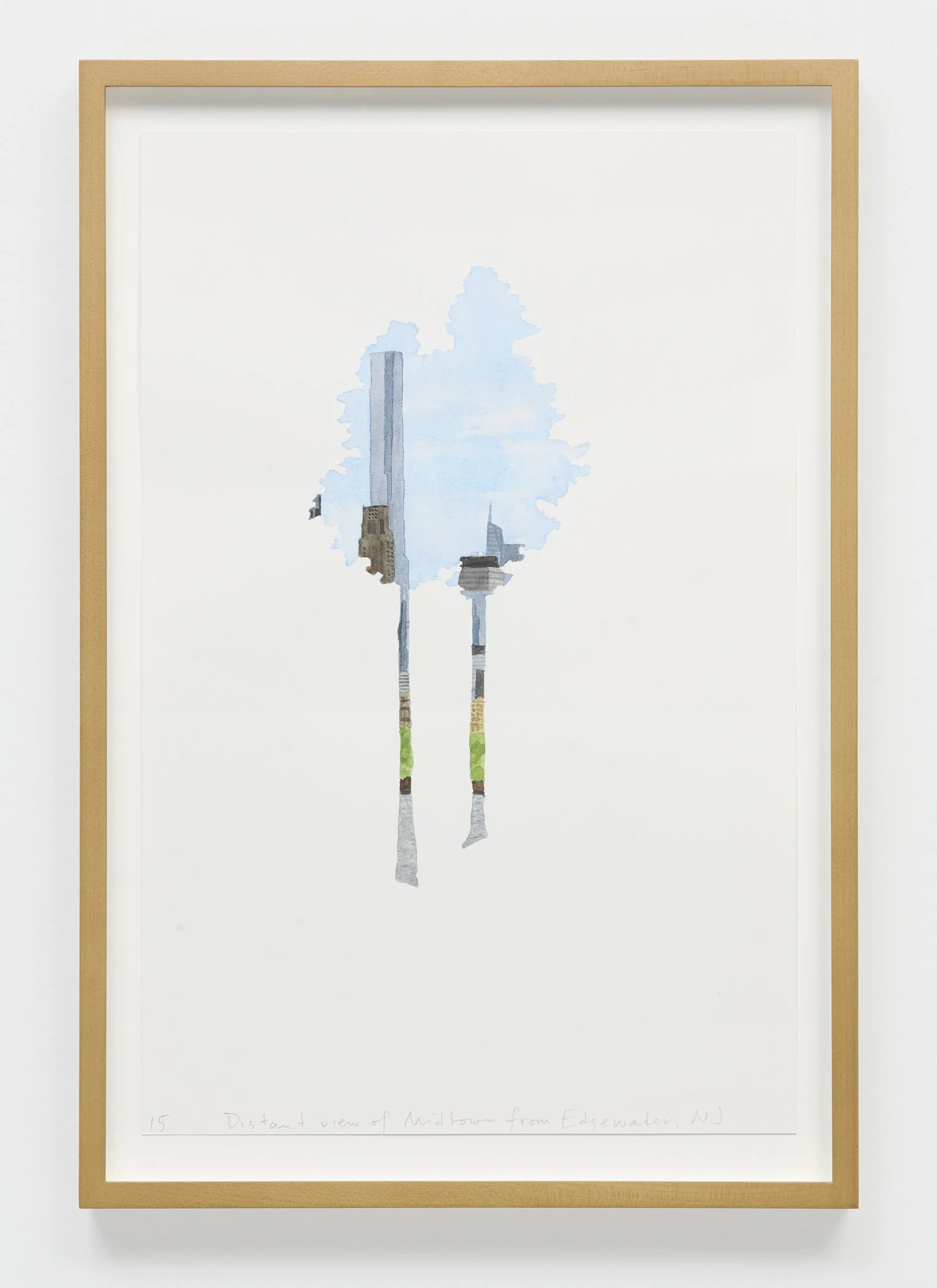
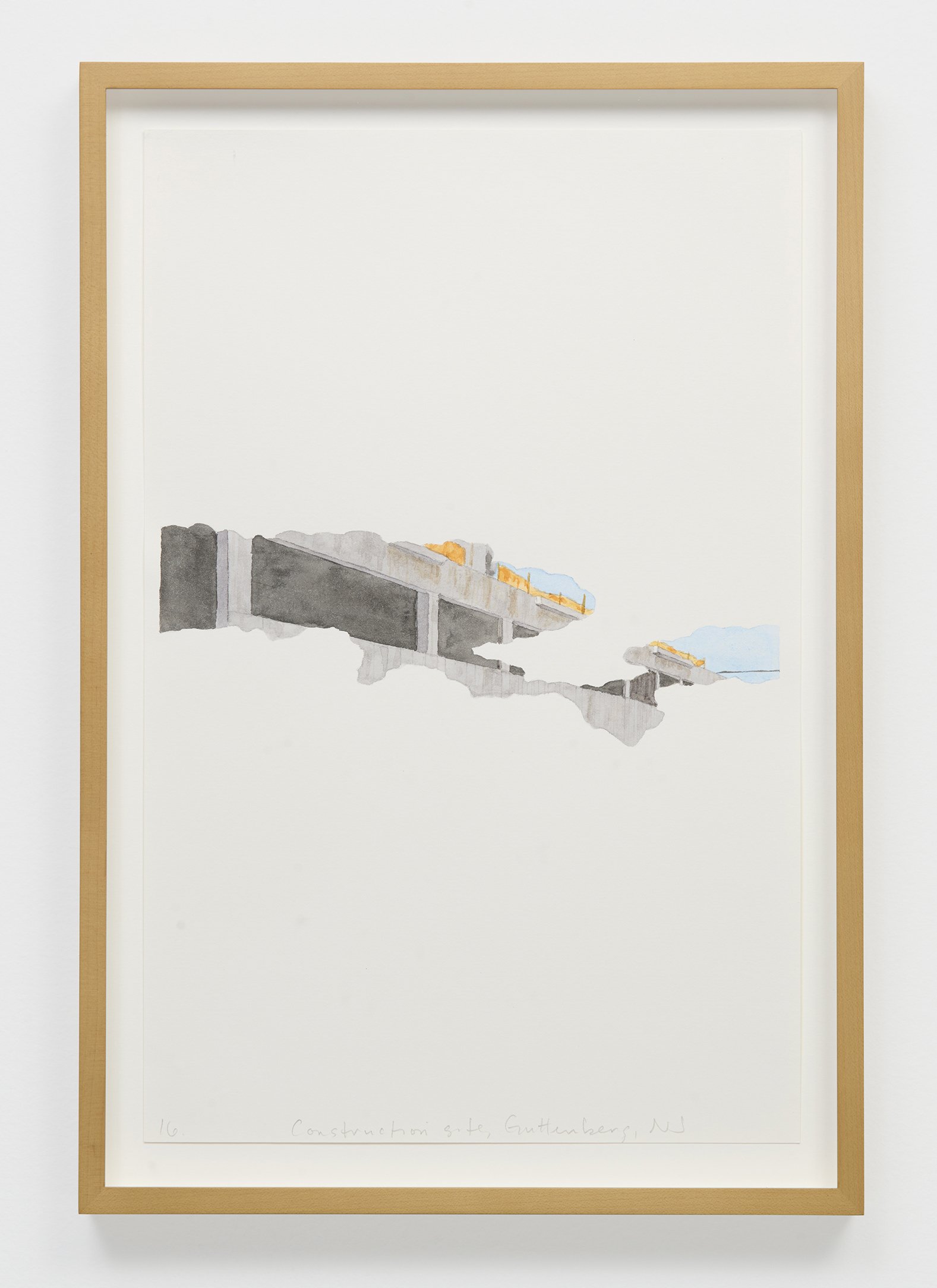
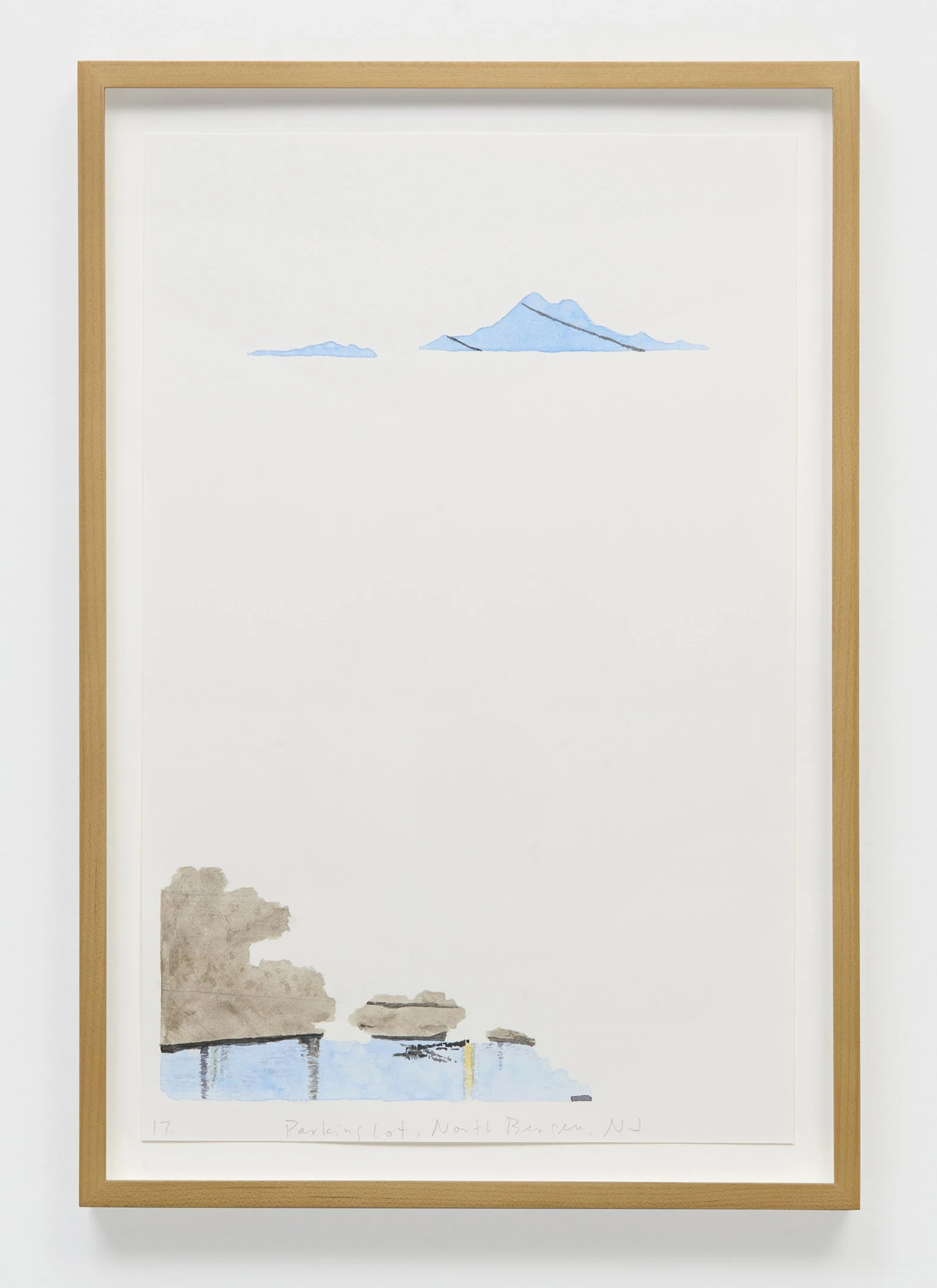
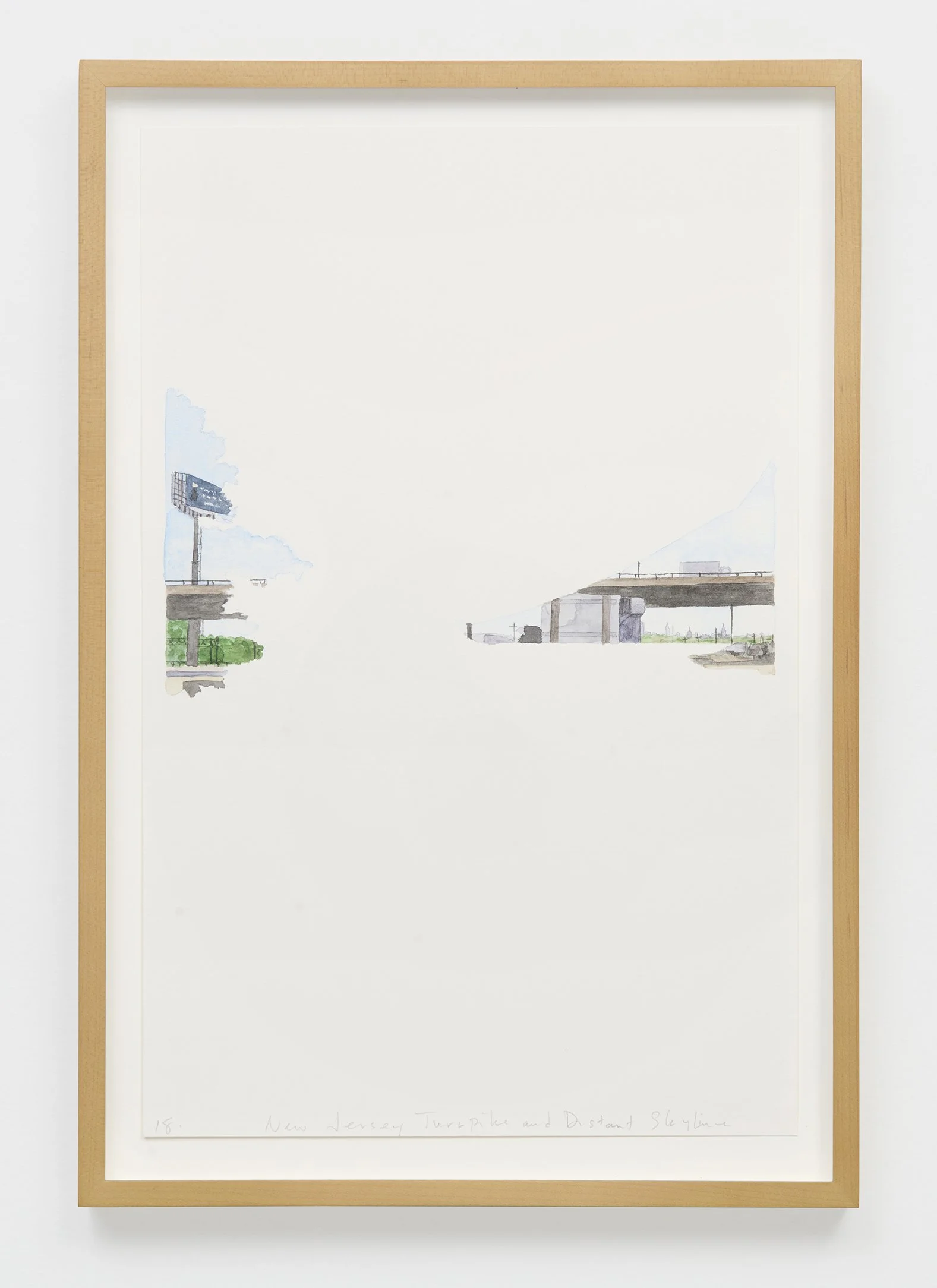
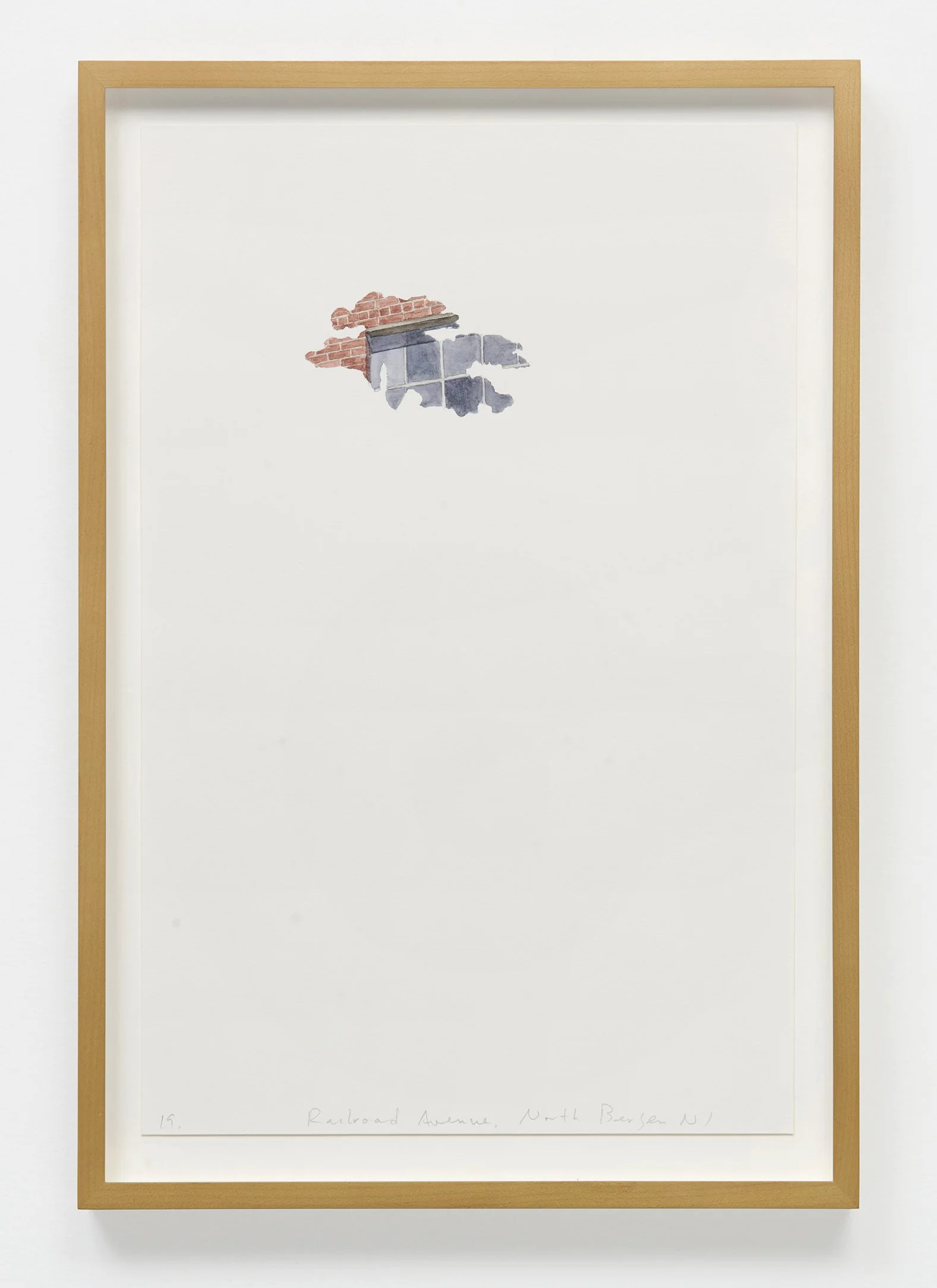
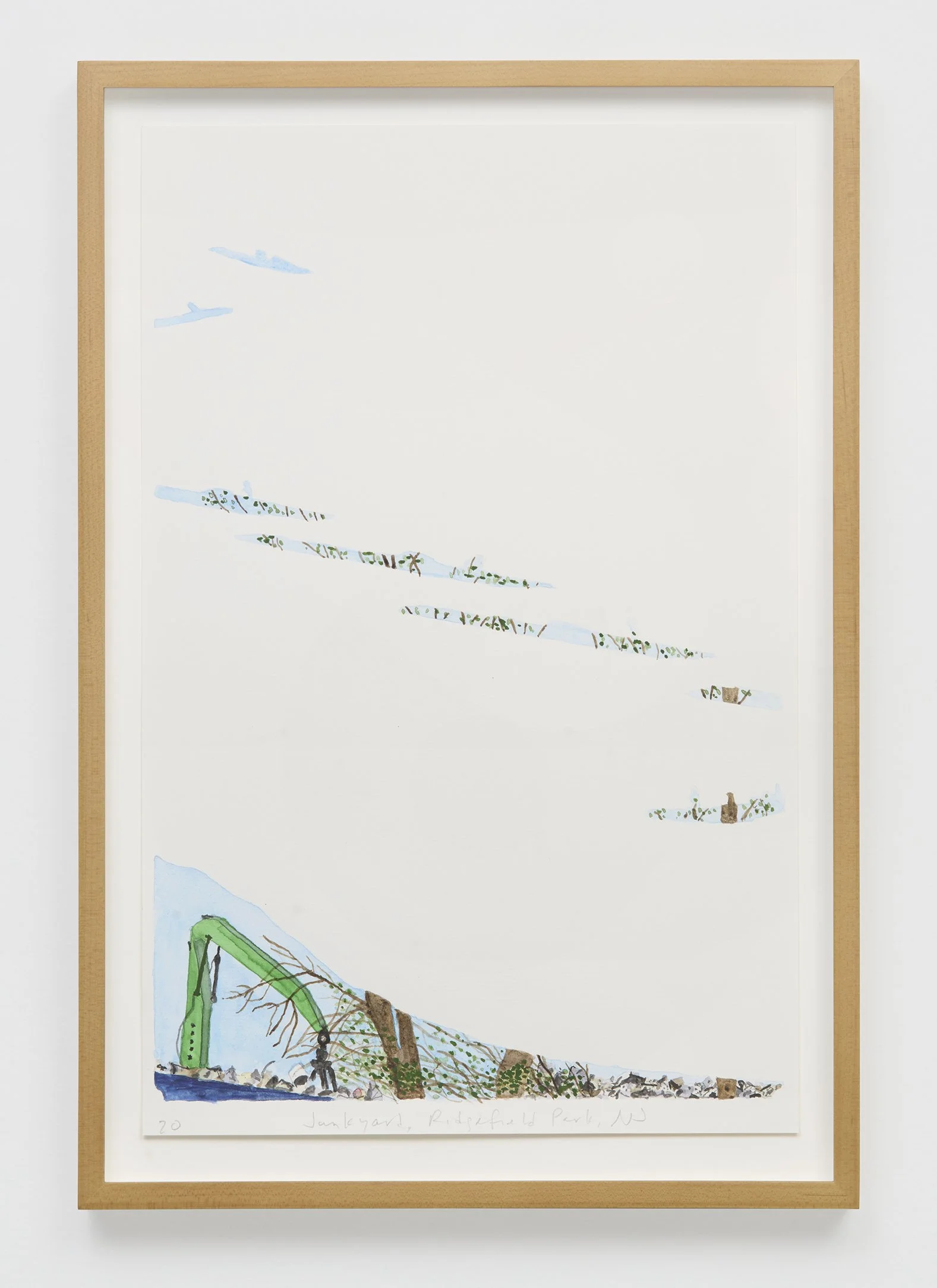
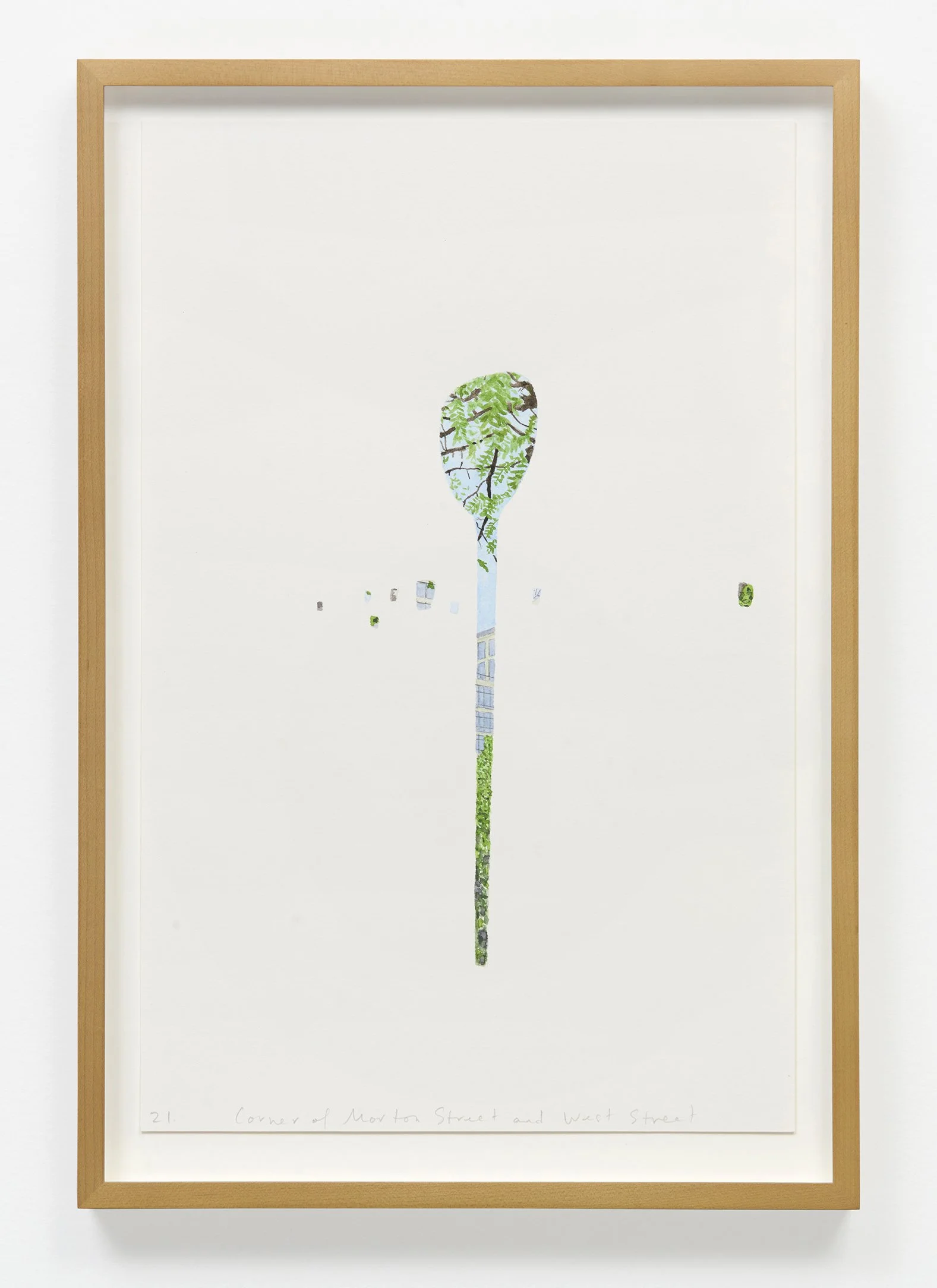
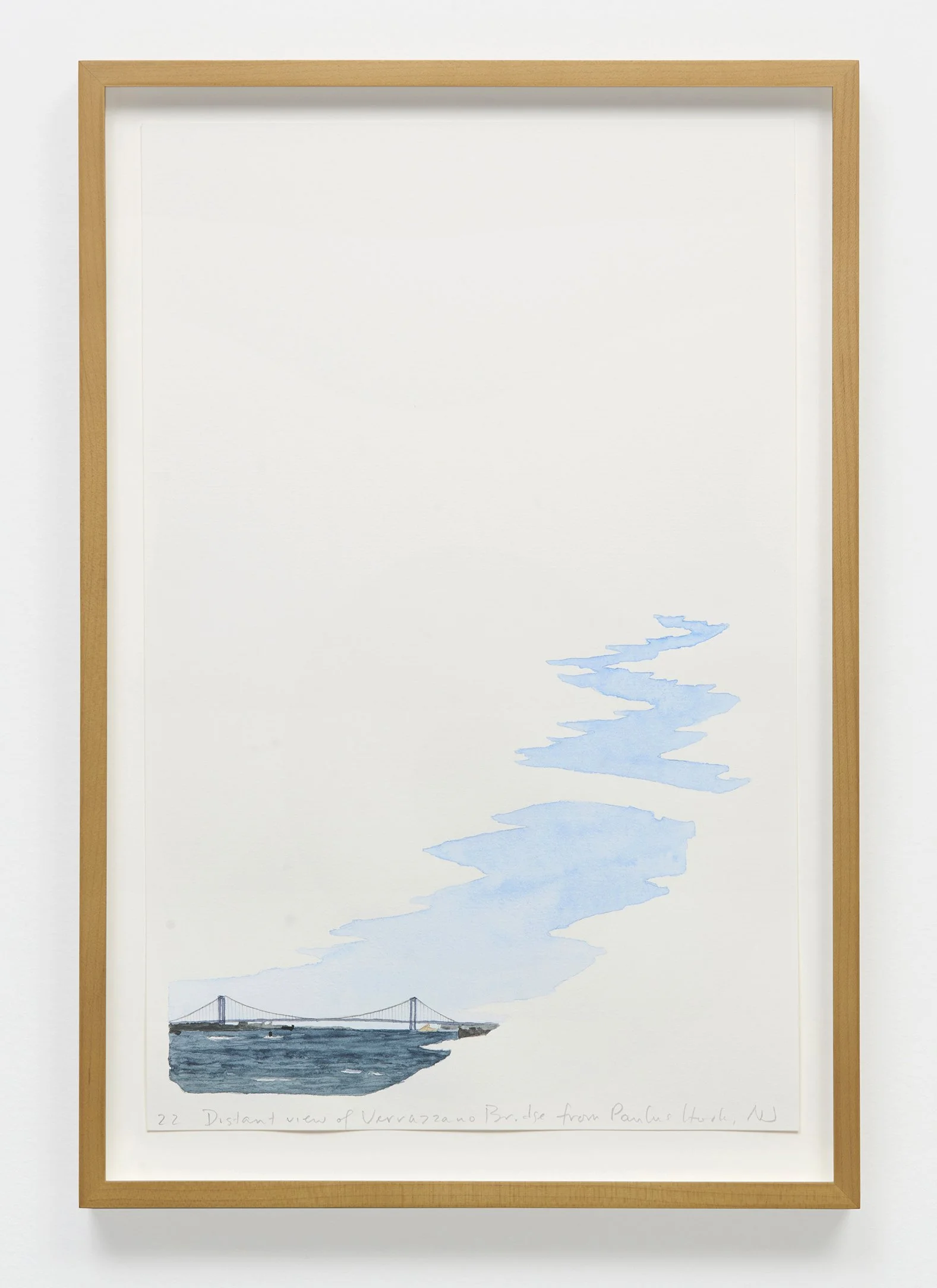
This series of watercolor drawings responds to Hiroshige’s woodblock print cycle One Hundred Views of Edo, a set of 117 views of specific locations in and around Edo (now Tokyo). Researchers have created maps which diagram Hiroshige’s series, with points denoting the approximate location from which a person could have stood in the 19th century in order to see the view depicted in each print.
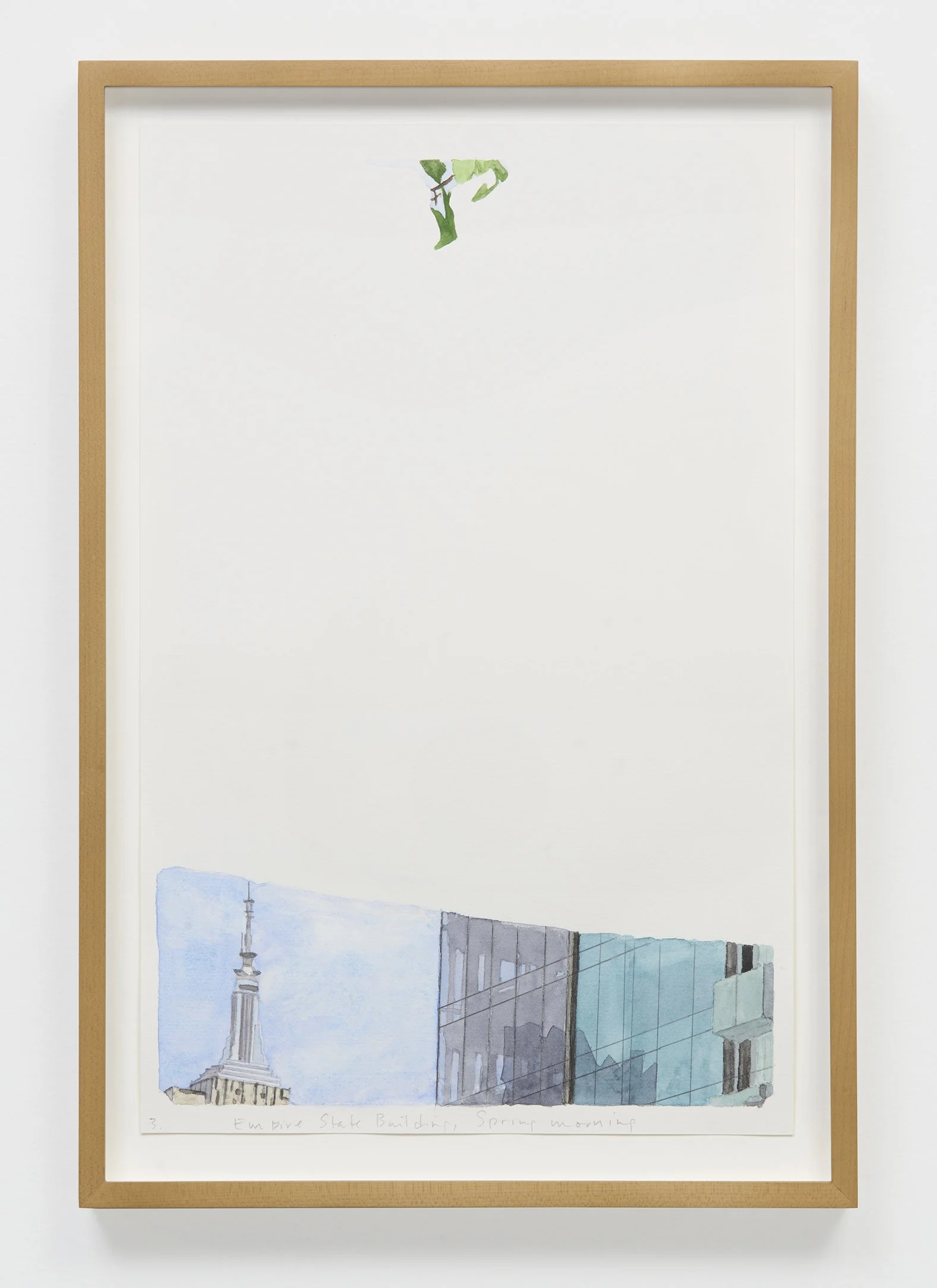
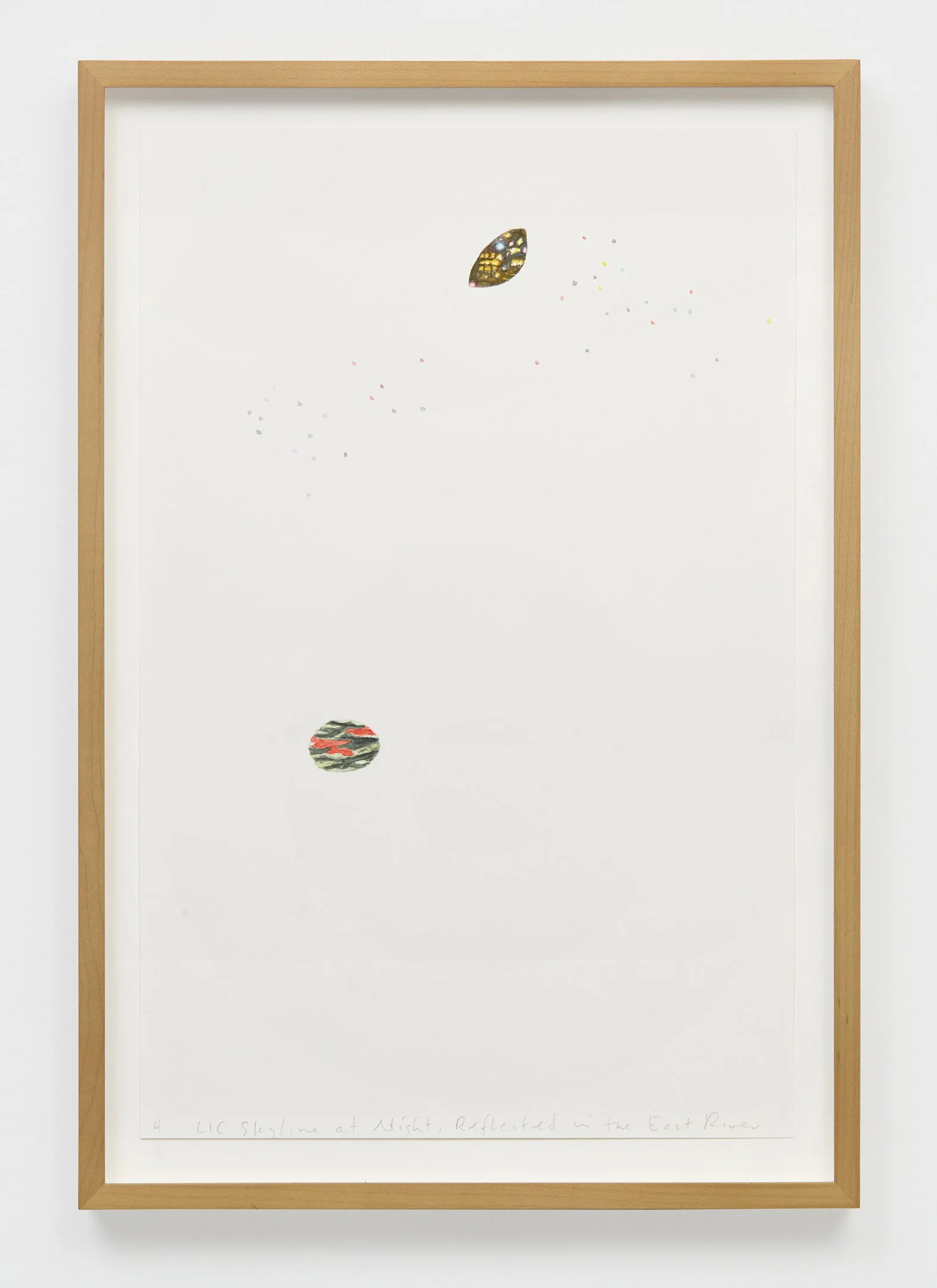
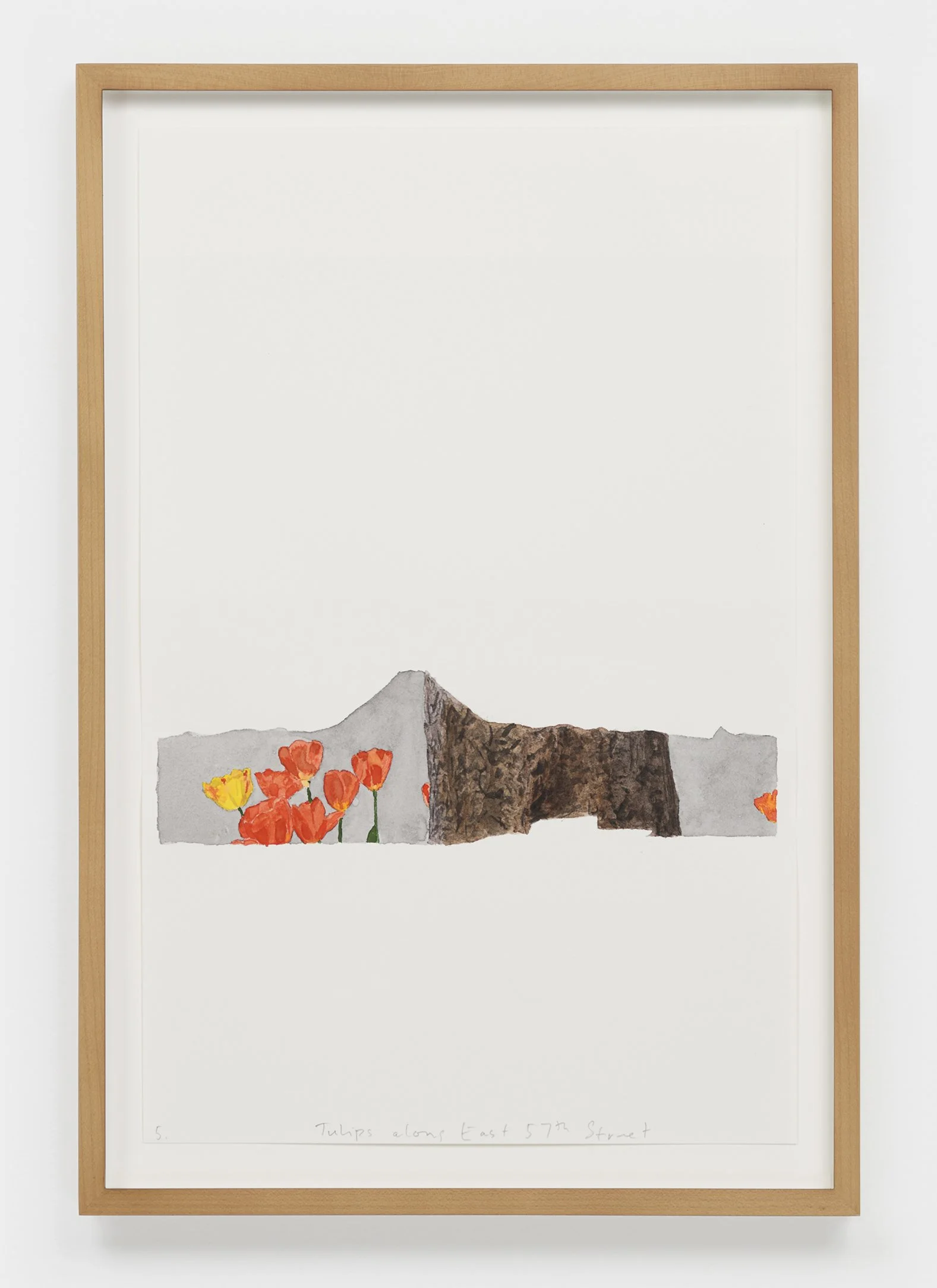
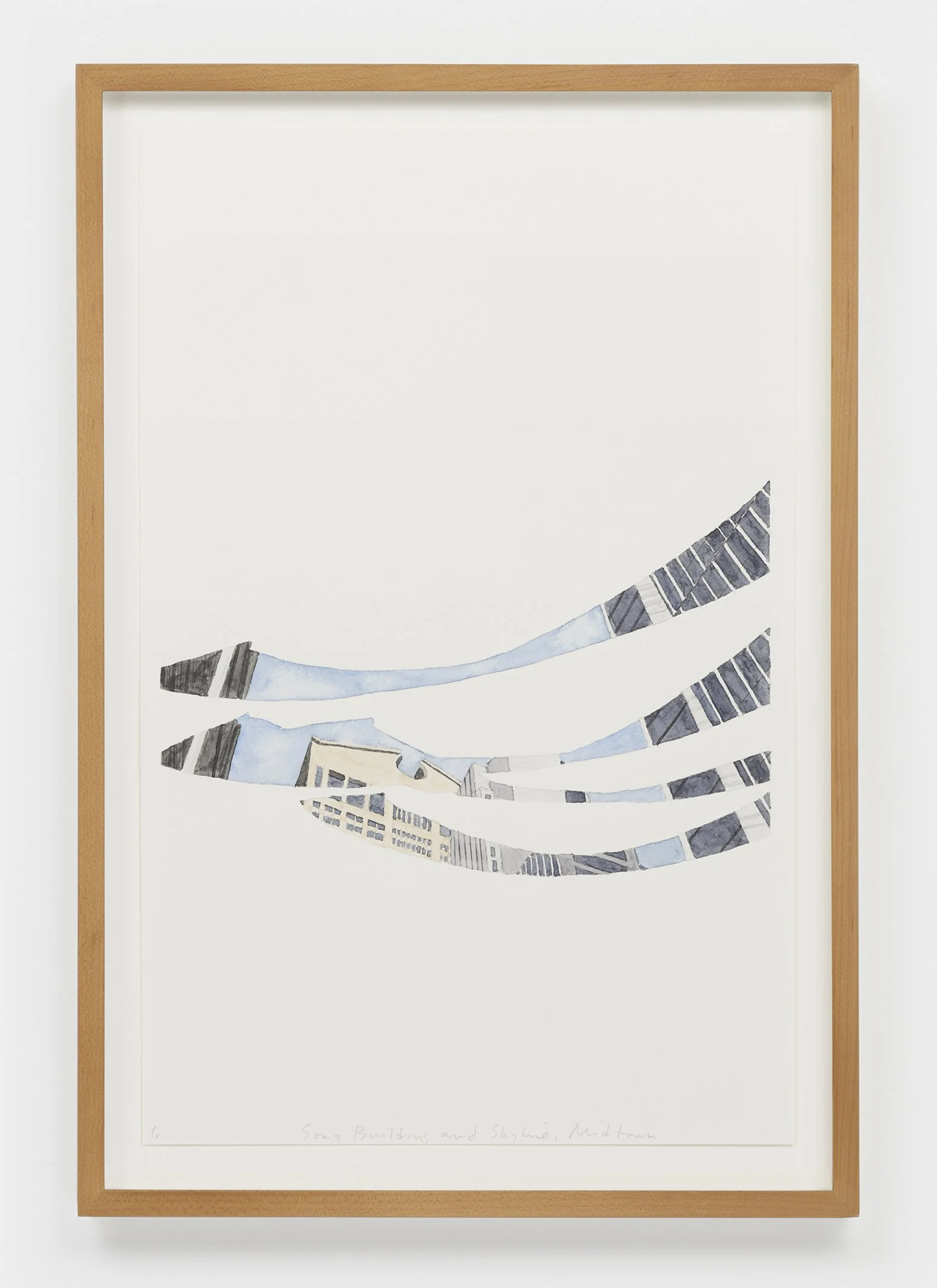
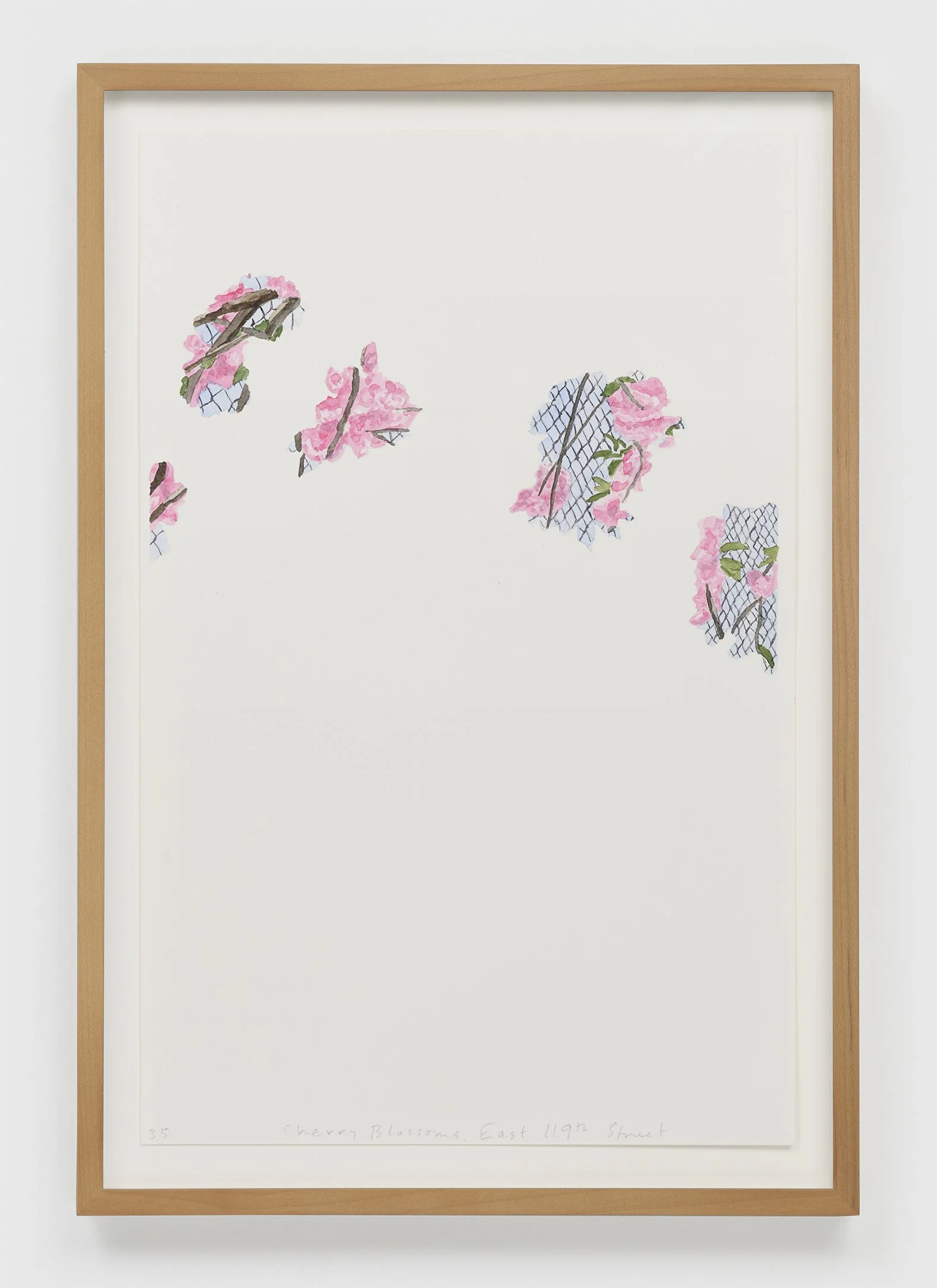
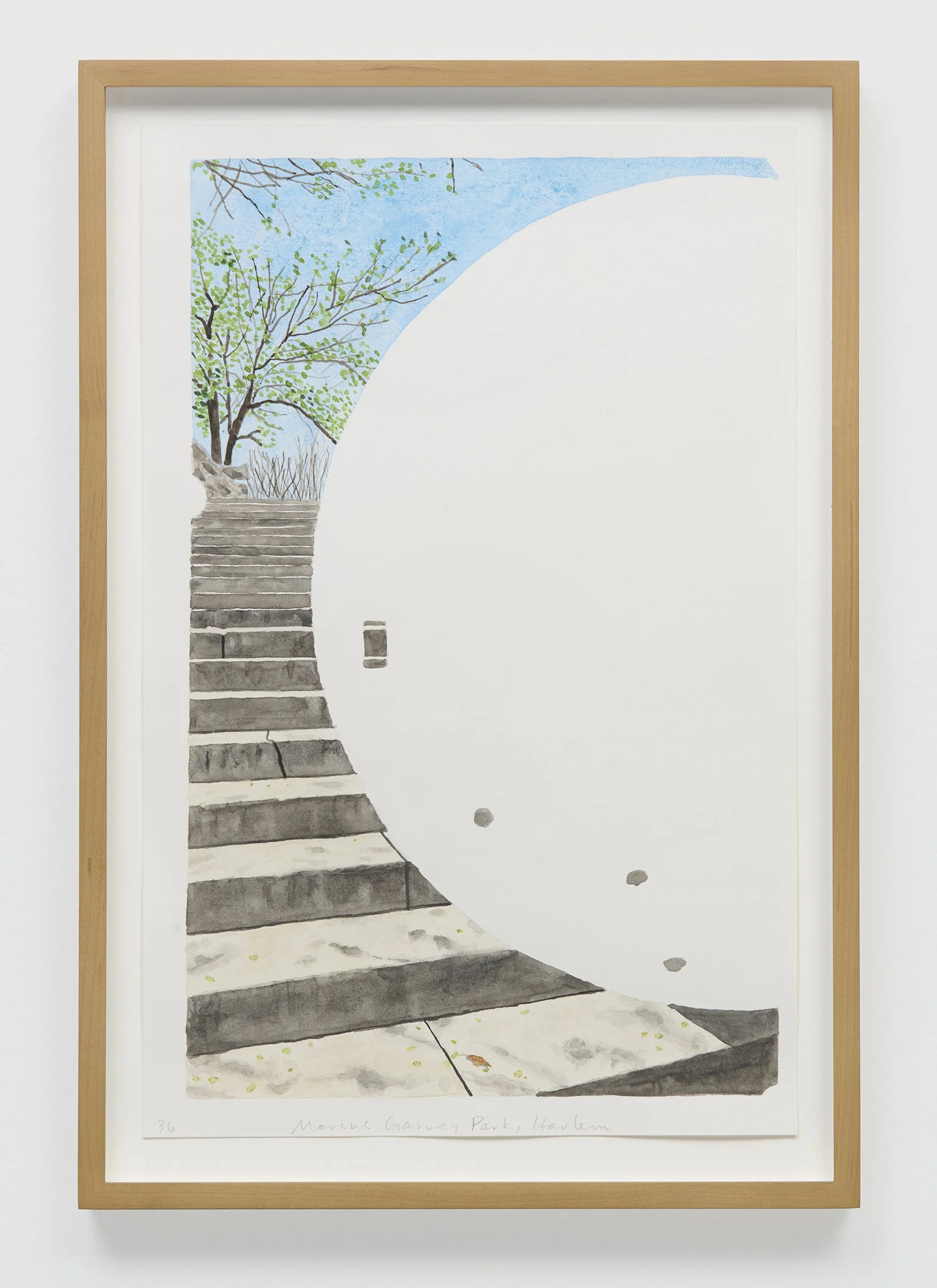
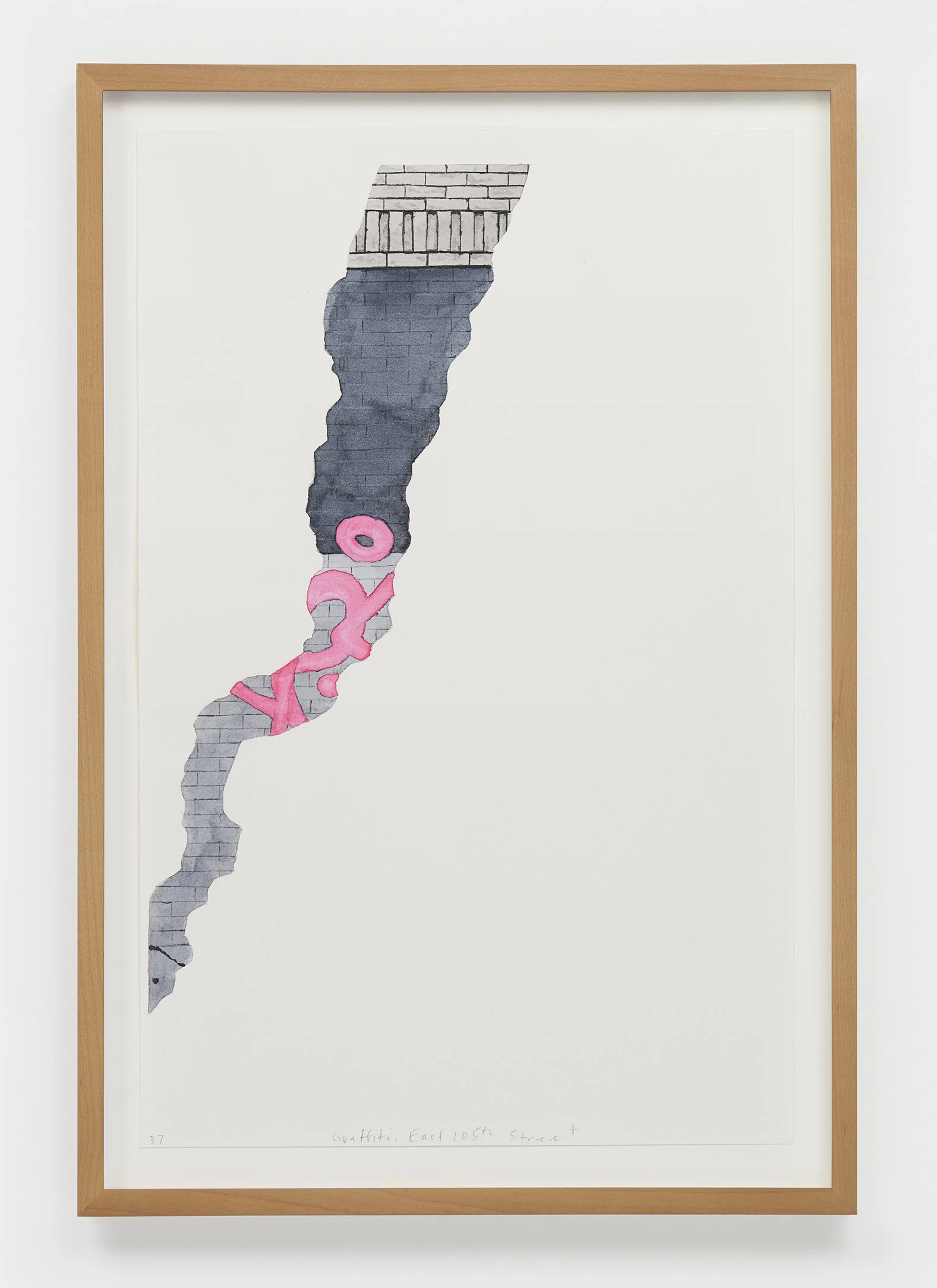
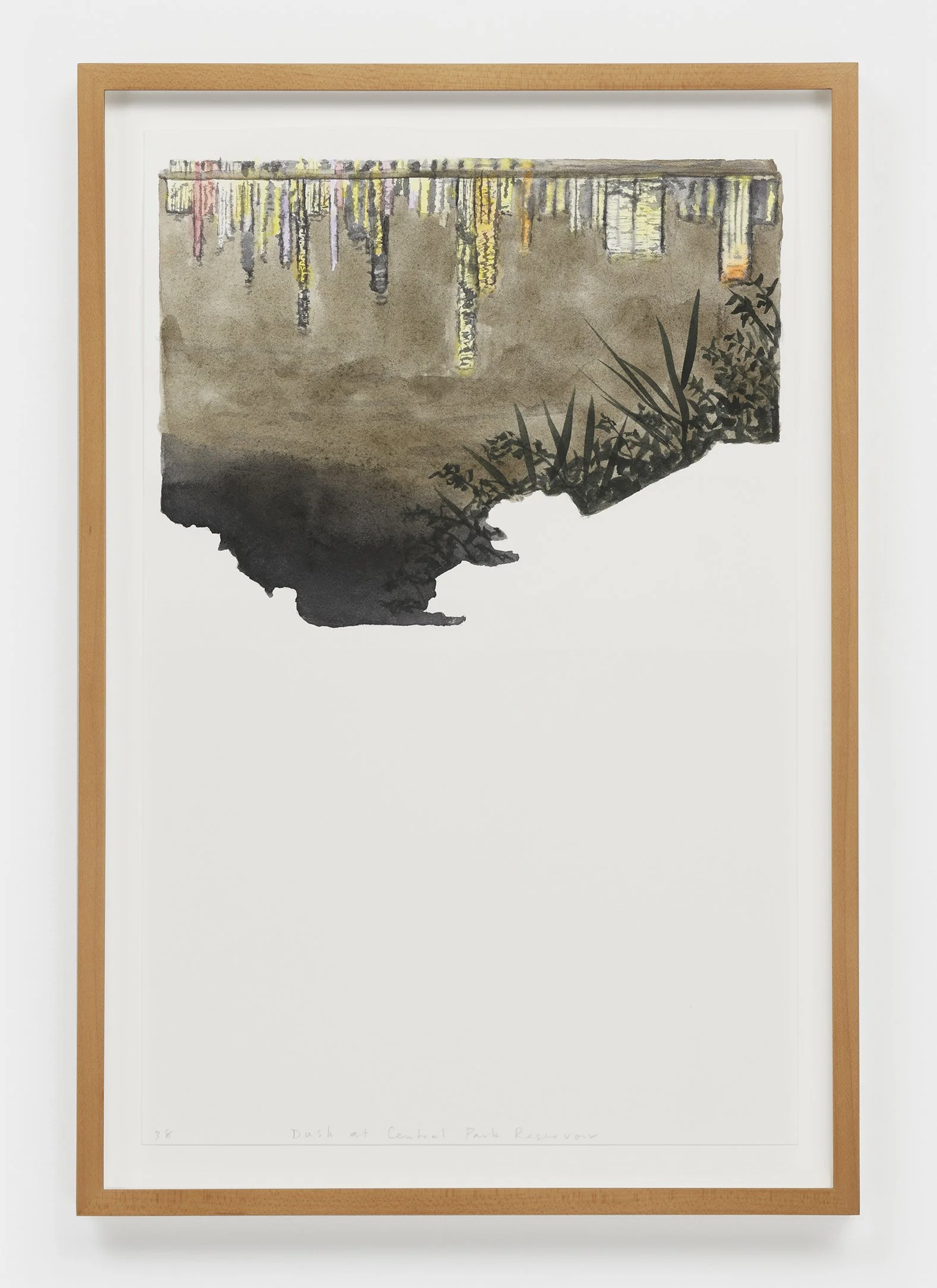
Each watercolor in this series was created according to a multi-step process. First, the arrangement of coordinates from a map of Hiroshige’s viewing locations was transposed, at scale, over a map of New York City, with the area of the Nihonbashi commercial sector in Tokyo corresponding roughly with Times Square in Manhattan. Then, photographs were taken at each of the resultant locations as they fell in New York City, New Jersey, and the surrounding waterways. These photographs, like the prints, were seasonal. For example, if a given print by Hiroshige depicts a “Spring view,” the photograph of the corresponding New York location would be taken during the Spring. Hiroshige’s print cycle is noted for its radical compositional approach, with forms often placed in the extreme foreground of the image, sometimes nearly obscuring the depicted landscape. The watercolor drawings pay homage to this compositional idiosyncrasy: for each photograph, a selection of shapes were taken from the corresponding woodblock print, which serve as a mask placed over the photograph. The resultant watercolors depict only the parts of the photograph that are visible through these shapes, with the space outside of the shapes left blank.
This installation consists of the 42 watercolors that reference Hiroshige’s 42 “Spring” prints, the first 42 prints from the One Hundred Views of Edo series.